
Published on 10/13/2026
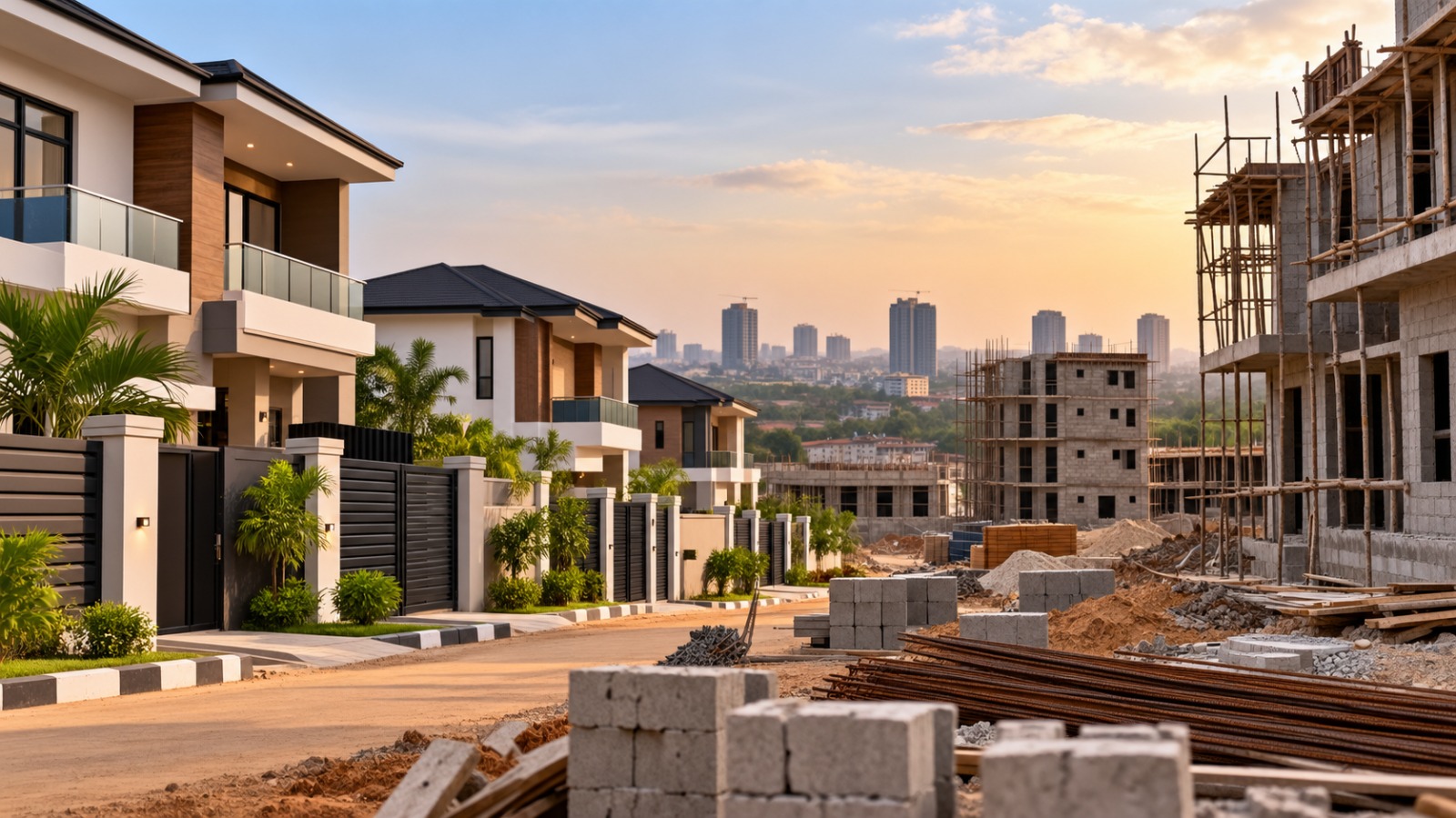
The language of the Nigerian property market has changed. Developers who once barely acknowledged middle-class buyers are now marketing to them directly, announcing affordable schemes, launching suburban estates and promising the democratisation of homeownership. The announcement is real. The delivery is considerably more complicated. Behind the marketing shift, a set of structural realities is working systematically against the Nigerian middle-class buyer in ways that are not fully visible from the brochure. At TheHouse48, understanding how pricing decisions, construction cost pass-throughs and financing structures combine to make affordable housing less accessible than the developers building it would like to admit is essential knowledge for any buyer navigating this market.
The Construction Cost Crisis That Becomes the Buyer's Problem
The starting point of this conversation is honest rather than conspiratorial. Nigerian developers are not pricing out the middle class as a deliberate strategic choice. They are responding to a cost environment that has become genuinely brutal, and passing those costs to buyers because there is nowhere else for them to go. The price of a 16mm iron rod soared from ₦2,000 in 2023 to ₦18,269 in 2025, an increase of over 800%. Cement costs surged similarly. Labour, transportation, diesel for generators and the cost of borrowing construction finance at commercial rates between 25 and 30% per annum all rose simultaneously. For developers, affordable housing works on thin margins, and when input costs multiply several times over in two years, the margin does not simply compress. It disappears. The developer who continues to build at the price promised when the project was conceived is the developer building at a loss, and most of them eventually stop rather than absorb it. The projects that do complete do so at revised prices that most middle-class buyers cannot access with the income they were earning when they signed up.
The Land Problem That Compounds Everything
Land is often described as abundant in Africa, yet affordable housing developers struggle to access it in any location that makes the end product financially viable for the target buyer. In Lagos, land in areas close enough to employment centres to attract middle-class tenants or owner-occupiers carries prices that make any affordable end product impossible once construction costs are added. Developers who want to build genuinely accessible housing are pushed to the urban fringe, where land is cheaper but infrastructure is thinner, commutes are punishing and the middle-class buyer they are targeting has to make a trade-off between affordability and livability that undermines the proposition. This creates a geographic sorting effect where the developments marketed as affordable exist in locations that make them functionally expensive to live in, once transport costs, time and infrastructure deficits are accounted for.
The Dollar-Denominated Pricing That Freezes the Middle Class Out
The most direct mechanism through which Nigerian developers are pricing out the middle class operates through dollar indexing. Premium residential developments in Lagos and Abuja are priced in dollars, which means their naira equivalent rises automatically every time the naira depreciates, regardless of what is happening to naira incomes. A development quoted at $80,000 per unit in 2022 when the dollar traded at ₦460 cost ₦36.8 million. The same unit at the same dollar price in 2026 at approximately ₦1,455 per dollar costs ₦116.4 million. The developer's dollar price has not changed. The middle-class Nigerian's naira income has not tripled. The gap between them is the mechanism by which the middle class is being priced out not by developer greed but by currency arithmetic. This dynamic also explains why diaspora buyers continue to access the premium market even as domestic middle-class buyers are being compressed away from it, and why the naira's weakness as a buying advantage described in our earlier blog on turning currency weakness into property advantage applies only to those holding stronger currencies, not to those earning in naira.
The Financing Gap That Locks the Door From Inside
The developer pricing problem is made structurally worse by the absence of financing that would allow buyers to bridge the gap between their savings and the purchase price. Commercial mortgage rates in Nigeria sit between 25 and 30%, which makes formal mortgage financing on any middle-class property an economically irrational proposition. The FMBN's 6% product and the MREIF's 9.75% structure serve only formal sector employees who have been contributing to the National Housing Fund, a category that excludes Nigeria's estimated 4.6 million informal workers in Lagos alone. As Finance Minister Wale Edun noted in February 2024, only 5% of Nigerians have more than ₦500,000 in their bank accounts, which puts the deposit requirement for even the most modestly priced estate development beyond immediate reach for the overwhelming majority of the population. The developer instalment plan exists as a partial solution, but it spreads a payment that is already unaffordable rather than making it structurally accessible.
The Affordability Number That Exposes the Gap
The National Housing Data Technical Committee's 2026 assessment places Nigeria's quantitative housing deficit at 14.925 million units, a figure that has grown despite years of development activity because the units being built are not the units the deficit requires. A housing programme that delivers units without addressing affordability may increase supply while leaving the underlying access problem largely unresolved. This is precisely the condition the Nigerian market is in. Supply is increasing. Affordability is decreasing. The middle-class buyer who earns a naira income, saves in naira, needs naira-priced housing close enough to their workplace to be functional and requires financing on naira terms is being systematically underserved by a market that has moved, either through dollar indexing or through peripheral location, beyond what their circumstances can reach.
TheHouse48 believes that the middle-class pricing problem in Nigerian real estate is not a reason for pessimism about the market but a reason for clarity about where within it genuine opportunity exists for different buyer profiles. The naira-earning domestic buyer needs to pursue different corridors, different price points and different financing routes than the diaspora buyer or the dollar-holding investor. Understanding which side of this divide you are on, and what the market currently offers your specific position, is the beginning of a strategy rather than the end of a dream.
Sign up for our emails and be the first to know about special offers.
Sign In
Comments