
Published on 9/21/2026
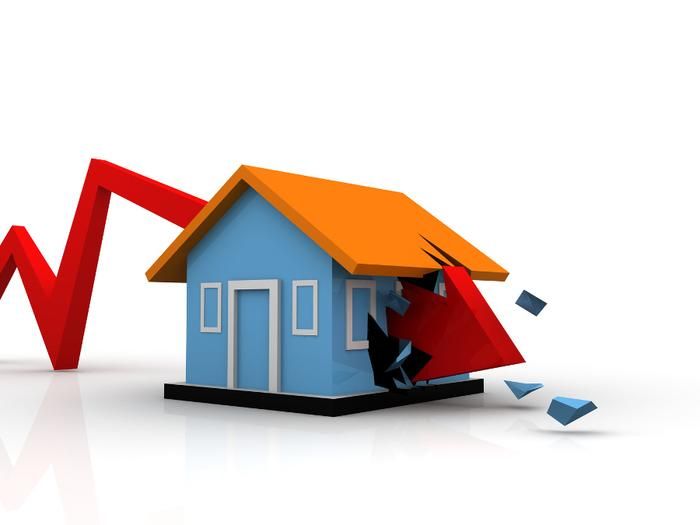
The word recession triggers a specific fear in most property owners and buyers: that values will collapse, equity will evaporate and everything built across years of mortgage payments will be exposed to a market that suddenly does not want to pay what was paid. The historical record is considerably more reassuring than that fear suggests, and also more nuanced than the reassurance implies. What history actually shows is that recessions and housing crashes are not the same event, that they have overlapped only once in the past half century in a way that produced genuinely catastrophic price declines, and that the more typical recession story for property is one of pause rather than collapse. At TheHouse48, understanding that distinction is one of the most practically important things any buyer, seller or investor can carry into an uncertain economic environment.
The Historical Record That Most People Have Not Read
In four of the last six US recessions, home prices actually went up. In one of the remaining two, home prices dropped less than 2%. The exception that most people carry in their minds as the template for recession real estate, the 2008 to 2009 Global Financial Crisis, was not a typical recession at all. It was a very specific situation involving risky mortgage lending at industrial scale, a financial system operating on fraudulently rated securities, dramatic overbuilding in specific markets and a lending collapse that simultaneously reduced demand and flooded supply. The S&P Case-Shiller National Home Price Index experienced a peak-to-trough decline of over 30% across that event, a figure that has coloured every recession conversation since. In recessions that did not feature the simultaneous collapse of mortgage lending standards and a supply glut, home prices held or rose because the factors that make housing valuable, the need for shelter, the constraint on land supply, the long holding periods of existing owners, do not disappear because GDP has contracted for two consecutive quarters.
Why Recessions Affect Different Property Markets Very Differently
The 2026 housing environment illustrates this principle in real time. US annual home price growth was 0.8% in May 2026, picking up from 0.4% year-over-year in April, with the current Cotality economist describing the market as one where a housing surge is waiting for the rest of the economy to catch up rather than one where economic weakness is pulling values down. Regional divergence is the defining feature of any recessionary or near-recessionary housing market. Sun Belt and Southern markets where new construction surged face more supply pressure than inventory-constrained coastal and Midwest metros in a downturn scenario, meaning the national average figure masks meaningful local variation that determines individual outcomes. A well-located property in a supply-constrained area with genuine employment demand behind it performs very differently from an overbuilt suburban development in a single-employer town when economic pressure arrives.
The Rate Dynamic That Has Historically Protected Buyers Who Time It Right
Every one of the last six US recessions produced a decline in mortgage rates as the Federal Reserve cut rates to stimulate economic activity. That rate cut dynamic is the mechanism through which recessions have historically created buying opportunities rather than purely destroying value. Fear keeps many buyers on the sidelines during recessions, reducing bidding wars and giving remaining buyers more negotiating leverage, at precisely the moment when rates are declining and financing a purchase becomes more affordable. The buyers who have consistently built the most property wealth across cycles are those who maintained their purchasing position through periods of economic uncertainty rather than exiting and attempting to re-enter at the recovery. More than half of current US homeowners carry mortgage rates below 4%, which means they are not being forced to sell, which means supply does not flood the market at the moment demand softens, which is the primary structural reason why the 2008 scenario is unlikely to repeat in the near term.
What Investors Should Actually Do When a Recession Is Discussed
The practical implication of this historical record for property investors is specific. Cash buyers and well-capitalised investors benefit most from recessionary conditions because sellers increasingly value certainty of close over the highest offer when lending standards tighten and financing contingencies fall through. Rental housing has historically weathered recessions more effectively than the for-sale market, with overall rental vacancy rates rarely exceeding 7% during past downturns and multifamily vacancy increases typically ranging only 0.5 to 1.2% outside the 2008 event. In past recessions, new home sales volume has declined by anywhere from 3.5 to 66.2%, but excluding 2008 and the anomalous 2020 pandemic recession, the typical decline has been under 10%, and recovery of employment levels has historically taken approximately three years.
TheHouse48 believes that the most important thing any property owner or investor can do when recession conversation intensifies is separate the question of what typically happens from what happened once in 2008. One event does not make a historical pattern, and the pattern that history actually shows is that well-located property in genuine supply-constrained markets tends to pause rather than collapse, and that the buyers who act with conviction during that pause are the ones whose portfolios look strongest when the pause ends.
Sign up for our emails and be the first to know about special offers.
Sign In
Comments