
Published on 7/29/2026
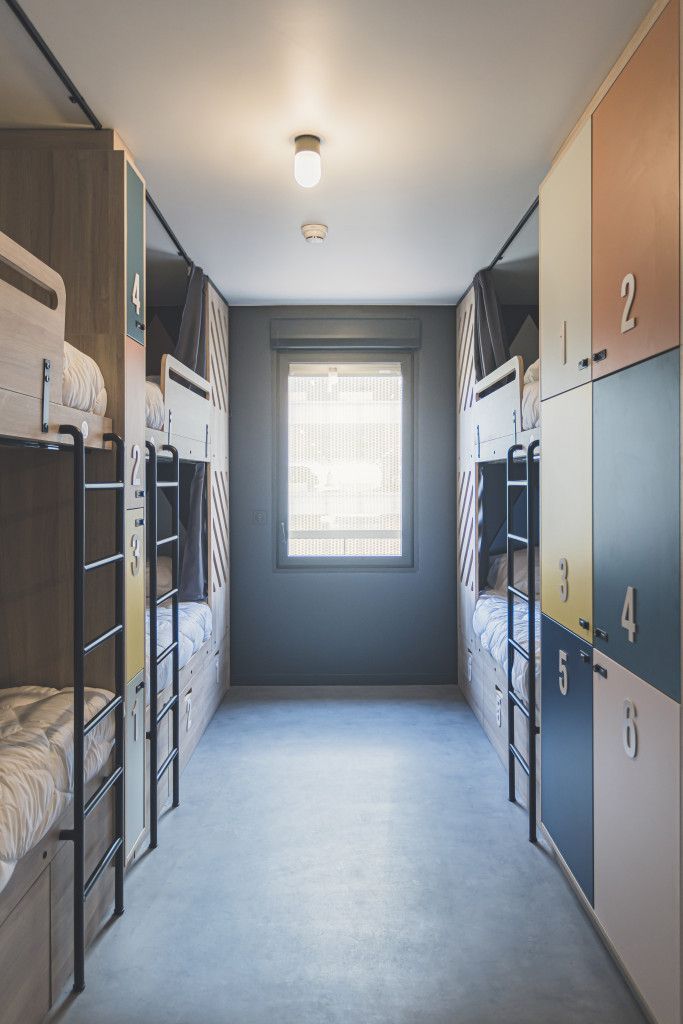
While investors argue over Ikoyi penthouses and Abuja land banks, one of the most structurally compelling real estate opportunities in Nigeria is sitting in plain sight, directly behind the gates of universities across the country. Nigeria's student housing market is not a niche story or an emerging trend. It is a crisis-scale supply gap with a captive, growing and reliably paying tenant base, and the investors who have identified it early are quietly building portfolios in one of the most undersupplied segments in the entire African real estate market. At TheHouse48, this is the conversation that deserves far more attention than it currently receives.
The Scale of the Deficit Nobody Is Talking About
The numbers from Africa's purpose-built student accommodation sector are striking enough on their own. Only 250,000 formal beds are available across the entire continent despite a student population of approximately 25 million, with a continent-wide deficit estimated at 1.5 million beds. Nigeria alone accounts for 1 million of those missing beds, making it the single most constrained student housing market in Sub-Saharan Africa by a significant margin. Nigeria leads Africa in development pipeline activity in this segment, reflecting strong investor interest even as structural constraints slow execution. The Federal Government signalled the scale of this acknowledgement by announcing plans to invest ₦250 billion in student hostel development across tertiary institutions nationwide, with a framework built around public-private partnership structures designed to mobilise private capital alongside government funding. That announcement is not a solution to the deficit. It is a signal that the deficit is real enough to command national policy attention.
Why the Tenant Base Is Different From Every Other Real Estate Market
What makes student housing attractive as an investment category is not just the size of the demand gap. It is the character of the tenant. Students at Nigerian universities represent a captive, annually renewing tenant base whose need for accommodation is non-discretionary. They do not choose whether to rent based on affordability pressures or economic sentiment in the way that urban professional renters do. Their need is created by their enrolment and disappears only when they graduate, at which point the next year's intake fills the vacancy. This perpetual demand cycle, driven by university enrolment rather than market conditions, gives student housing a demand stability that other residential categories simply do not have. Nigeria's university enrolment has been growing steadily, with the Joint Admissions and Matriculation Board recording over 1.9 million candidates sitting the Unified Tertiary Matriculation Examination in 2025, yet on-campus accommodation across most institutions satisfies only a fraction of that population.
The University Corridors Where the Opportunity Is Concentrated

The geography of the student housing opportunity follows Nigeria's major university locations, and the investment case is strongest in cities where the university is the dominant economic anchor rather than one employer among many. In Awka, student housing demand is actively driving expansion of residential estates around Ngozika Housing Estate and Ifite, with land in the GRA corridor ranging from ₦5 million to ₦25 million. Nsukka, home to the University of Nigeria, remains deeply undersupplied with off-campus accommodation of any quality. Ile-Ife around Obafemi Awolowo University, Benin City around the University of Benin, Ota around Covenant University and Ogbia around the Nigeria Agip Oil Company's community university all represent university cities where a small hostel of 10 to 25 rooms in the right location is operating in a permanently undersupplied market. In Lagos, the student housing market around UNILAG, Lagos State University and private universities in the Ota corridor is more competitive but also better capitalized, with developers now building purpose-built blocks rather than informal conversions.
What the Returns Actually Look Like
Student housing in Nigerian university towns operates on a rental model that differs structurally from urban residential lettings. Rent is typically paid in advance per academic session or per year, meaning cash flow is front-loaded rather than monthly. Occupancy rates in well-located student accommodation near major institutions run at near-100% through the academic calendar, with the primary vacancy risk concentrated in the long vacation period between sessions. A 20-room hostel near a major Nigerian university, priced at modest per-room rates reflective of student affordability, can generate annual yields that compare favourably with mid-market Lagos residential properties at a significantly lower entry cost, because land in university towns is priced as secondary market real estate rather than Lagos Island premium. Rental housing, short-let apartments, co-living spaces and student housing are expected to remain resilient throughout 2026 as household formation continues to outstrip ownership affordability across Nigeria's major cities.
TheHouse48 believes that the most durable real estate investments in Nigeria are the ones anchored to structural, non-discretionary demand. Student housing, in the right location, near the right institution, built and managed to a standard above what currently exists, meets that definition more cleanly than almost any other segment in the market right now.
Sign up for our emails and be the first to know about special offers.
Sign In
Comments