
Published on 10/2/2026
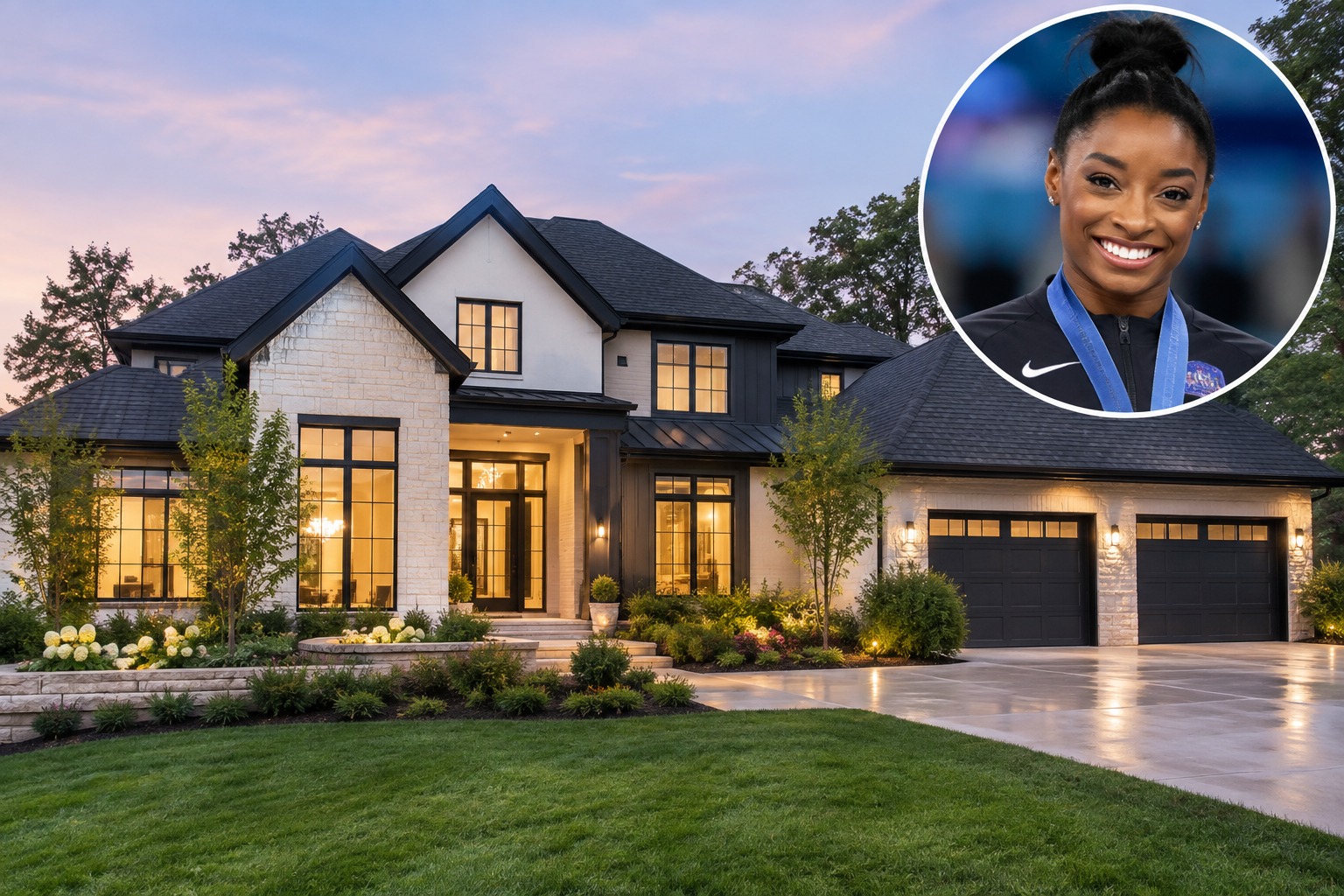
Most people who dream of building a custom home imagine a clean, exciting process: choose a design, break ground, move in. Simone Biles, the most decorated gymnast in Olympic history, went through a version of that process that looked considerably less cinematic. Five years, multiple delays, construction setbacks, a timeline that was missed by years rather than months, and a move-in that finally happened on November 11, 2025. The story of how she got there contains more practical real estate wisdom than almost any celebrity property transaction of the past decade. At TheHouse48, the lessons inside this journey are worth examining carefully.
The Starting Point That Made the Custom Build Necessary
Before the dream mansion existed, Biles lived in a 4,000 square foot home in Spring, Texas, that she purchased in 2020 for $750,000. The property sat within a gated community not far from where she grew up, included a pool, a home theatre, a dog wash station, a three-car garage and spa-style bathrooms. By most reasonable standards it was an exceptional home. What it was not was the lakefront custom build she and her husband, NFL safety Jonathan Owens, had been envisioning. The 2020 home became the bridge property, the place they lived well while building what they actually wanted, which is one of the most disciplined and frequently overlooked property strategies available to buyers with a longer-term vision. Rather than holding out entirely or rushing into a custom build with no liveable base, they made a considered interim purchase that served their needs completely while the real project took shape behind it.
The Timeline That Exposed the Realities of Custom Construction
Biles has been refreshingly transparent about how the build actually unfolded. The design process began in 2020 and took a full year to complete. HOA approvals caused further delays before ground was finally broken in February 2022. The original construction estimate was nine months, a figure she has since described with a laughing emoji as a promise that was not kept. The actual completion date was November 11, 2025, meaning the construction phase alone ran approximately three and a half years against a nine-month projection. The total timeline from the start of design to receiving the keys was almost exactly five years. The property, a waterfront estate in the greater Houston area of Texas, is valued at approximately three million dollars and includes sliding glass doors opening to lake views, a second level with a game room, a home theatre, a wet bar and a balcony overlooking the water, alongside the architectural and finish specification that a five-year design and construction process allowed them to execute without compromise.
What the Delays Actually Cost and Why They Are Normal
The gap between a nine-month estimate and a three-and-a-half-year construction reality is not an anomaly. It is one of the most consistently documented patterns in custom home building globally. Supply chain disruptions, contractor scheduling conflicts, material damage on site, HOA and planning approval delays and the inevitable design changes that occur when people live with a set of drawings long enough to see what they actually want are all contributors. Biles documented visible damage to expensive tile on the site during the construction period, which added both cost and timeline pressure to an already extended process. For buyers approaching a custom build, the practical implication of her experience is to budget a contingency of at least 20 to 30% beyond the quoted cost, to model a timeline that is at minimum double the builder's estimate and to have a liveable interim solution, as she did with the Spring home, that removes the psychological pressure of needing to move in by a specific date.
The Patience That the Custom Build Actually Requires
The most repeated phrase in Biles' own documentation of the project is that home building requires a lot of patience. She wrote it directly on her Instagram Stories alongside a throwback image of herself and Owens standing inside the house when it was still wooden studs. That framing is more instructive than it might appear. The buyers who experience the most distress during a custom build are almost always those who set their emotional state to the original timeline and then recalibrate it painfully with each delay. The buyers who navigate the same delays with the least damage are those who understood from the beginning that the estimate was a best-case scenario and that the finished product would be worth the patience the process demanded. The gap between those two experiences is not a function of how many delays occurred. It is a function of the expectations set before ground was broken.
TheHouse48 believes that the Simone Biles home story is not a cautionary tale about custom builds. It is an honest account of what they actually involve, delivered by someone who had the resources to absorb the delays, the interim solution to make them manageable and the patience to see the process through to a result she describes as worth every month of the wait. For any buyer considering a custom build, her timeline is the most useful data point available, and the question it invites is simple: do you have the bridge property, the budget contingency and the patience that the real version of this process requires?
Sign up for our emails and be the first to know about special offers.
Sign In
Comments