
Published on 6/25/2026
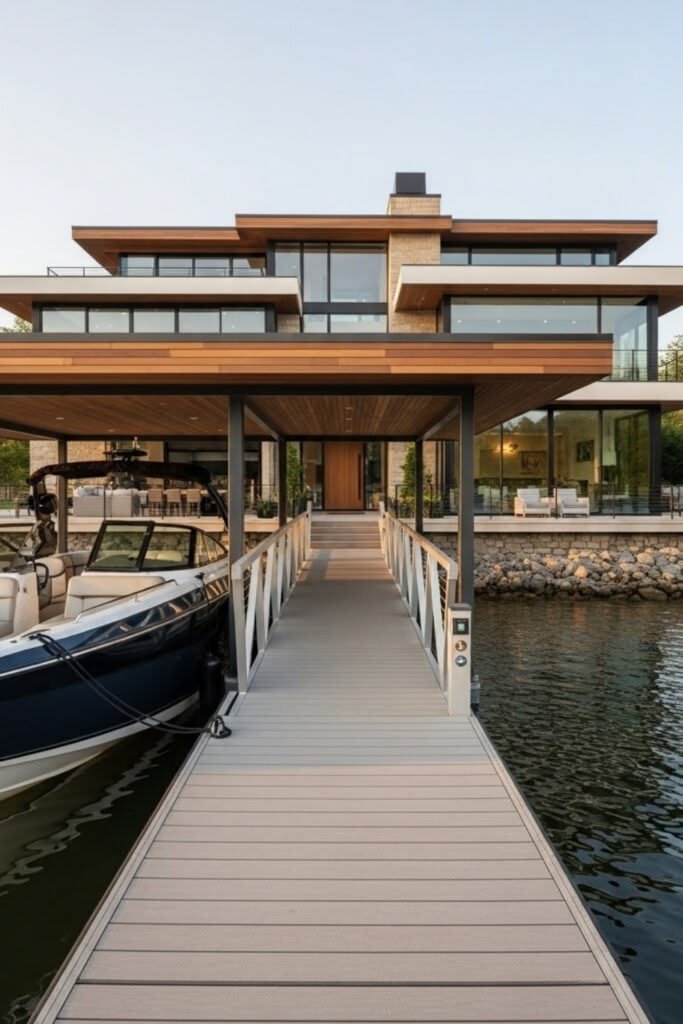
Most people think of waterfront property as the ultimate real estate aspiration. The view, the access, the sense of space that only open water can provide. But a growing number of buyers are taking that aspiration one step further, choosing not to live beside the water but on it. The floating home has moved well beyond its houseboat origins into a serious and rapidly expanding segment of the global property market, one that is attracting architects, investors and lifestyle buyers in numbers that would have seemed unlikely a decade ago. At TheHouse48, this is a category worth understanding clearly because it is growing faster than most people realise.
The Market Behind the Movement
The numbers describe a sector with genuine momentum. The global market for floating homes was estimated at $4.8 billion in 2025 and is projected to reach $9.2 billion by 2032, growing at a compound annual growth rate of 9.7%, driven by three converging forces: rising sea levels increasing demand for water-adaptive housing, urban land scarcity in waterfront cities, and a shifting lifestyle preference toward off-grid and water-based living. The investment activity at the high end of this market is significant. In December 2025, Waterstudio.NL signed a licensing agreement with a Dubai-based developer to construct 400 double-floor floating villas in the Dubai Water Canal, featuring integrated solar panels and greywater recycling, with a total project value estimated at $320 million. This is not a niche experiment. It is serious capital moving into water-based residential development.
The Value Proposition Against Land-Based Property
One of the most compelling arguments for floating homes in major cities is the price differential relative to comparable waterfront land. In cities like Seattle, Amsterdam and Vancouver, median waterfront property prices exceeded $1.5 million in 2025, creating a compelling value proposition for floating homes that can be acquired for $100,000 to $600,000 depending on size and specification. For buyers priced out of waterfront land ownership, a floating home delivers the same views, the same water access and the same morning quality of life at a fraction of the cost. Amsterdam's canal belt, one of the most studied floating home markets in the world, has demonstrated sustained value retention across decades, with permanent mooring licences in some areas trading as separately valued real estate assets.
What Modern Floating Homes Actually Look Like

The gap between the image most people carry of a houseboat and what is being built and sold today is considerable. Modern floating homes are designed with a strong focus on modern design, energy efficiency and premium materials, fully customisable to suit owners' personal preferences, and built to serve as permanent residences rather than recreational vessels. Fixed line broadband, dedicated parking, full kitchen and bathroom specifications comparable to high-quality land-based apartments, and structural engineering designed for permanent habitation are now standard features at the premium end of the market. Bluefield Houseboats launched a plug-and-play modular floating home system in February 2026, reducing onsite assembly time from 12 weeks to 10 days, with early adopters in the Florida Keys reporting 30% lower labour costs compared to custom-built units.
The Practical Considerations Buyers Need to Understand
Financing a floating home requires a different conversation than a conventional mortgage. In many jurisdictions, non-motorised floating homes permanently moored are classified under real estate rather than vessel regulations, which opens the door to conventional mortgage financing. Maintenance demands are more specific than land-based properties, with hull inspections, mooring fees and marine-grade materials forming a cost base that buyers need to factor carefully into their total ownership picture.
TheHouse48 believes the floating home market rewards exactly the kind of informed, open-minded buyer who is willing to look beyond conventional definitions of what a home can be. The water has always been valuable. Now, increasingly, it is liveable.
Sign up for our emails and be the first to know about special offers.
Sign In
Comments