
Published on 7/22/2026
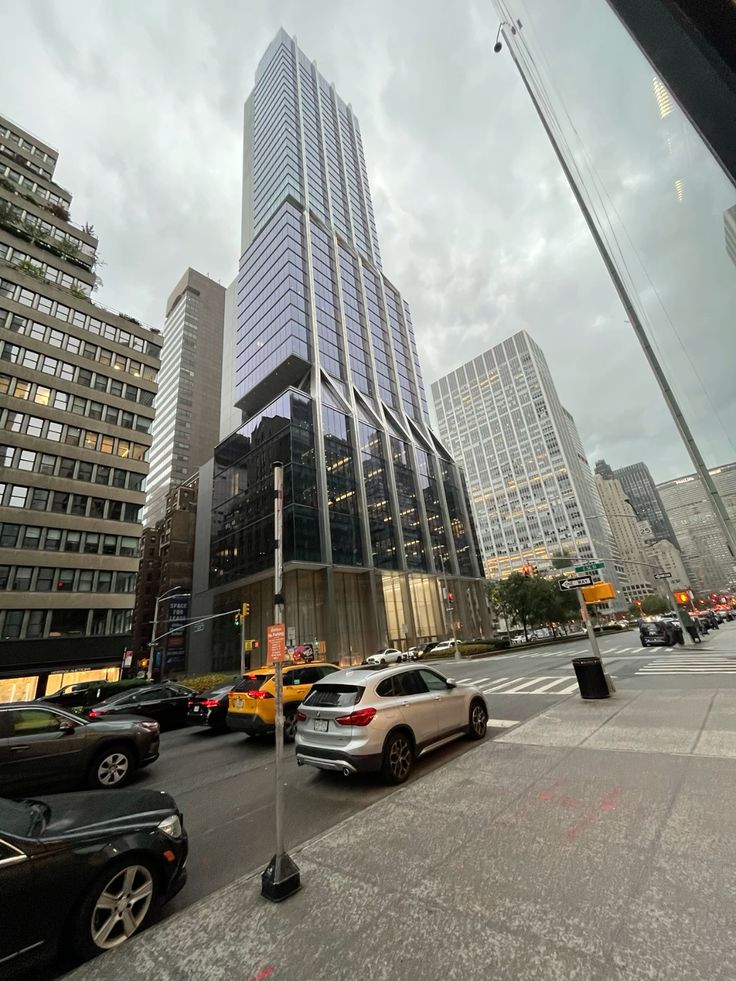
The question of why certain streets never stop appreciating is not really a question about those streets. It is a question about scarcity, identity and the psychology of wealth at its most concentrated. The addresses that have commanded the world's highest property prices for decades are not simply locations. They are memberships in a self-reinforcing club that becomes more exclusive with every transaction. Understanding why they keep going up explains something fundamental about how real estate value works at every level of the market. At TheHouse48, this is one of the most instructive conversations in luxury real estate.
The Streets That Define the Conversation
New York's Billionaires' Row along 57th Street is currently the most closely watched ultra-prime residential corridor in the world. Average prices stand at roughly $5,340 per square foot as of early 2026, with the average luxury sale price across the corridor sitting at approximately $25.6 million. The world record for a residential sale was set here in 2019 when Ken Griffin purchased a penthouse for $238 million, but transactions of $100 million or above have continued since, with a $135 million Aman New York penthouse and a $115 million Central Park Tower duplex closing in 2024. Separately, London's Winnington Road in Barnet held the title of the UK's most expensive street in 2026 with an average asking price of £12.5 million, a rise from £11.9 million in 2025. On the retail side, Cushman and Wakefield's 2025 Main Streets Across the World report confirmed London's New Bond Street as the world's most expensive retail destination, surpassing Milan's Via Montenapoleone after 22% rental growth in a single year brought average rents to $2,231 per square foot. In Singapore, Nassim Road produced Asia's most striking listing of 2025, a Good Class Bungalow brought to market at $308 million in October 2025, confirming the street as one of the world's most expensive residential addresses. Meanwhile, Palm Jumeirah in Dubai recorded its most expensive secondary villa resale at AED 161 million, with villa values up 41% year on year and 63% above 2014 peaks.
Why These Streets Never Correct
The mechanism behind perpetual appreciation at the ultra-prime end is not simply demand. It is the irreplaceable combination of five factors that almost no other location can simultaneously offer. The first is supply scarcity that is genuinely permanent. Indian Creek Island in Miami contains 35 homes. Monaco's Avenue Princess Grace fronts a stretch of Mediterranean coastline that cannot be extended. The Peak in Hong Kong has a finite number of sites with unobstructed harbour views. When supply is permanently capped and the global population of buyers able to compete is growing, price appreciation is not cyclical. It is structural. The second factor is identity reinforcement. The people who own on these streets are not simply buying real estate. They are buying proximity to other owners of equivalent stature, and that social capital appreciates alongside the financial one. The third is trophy property provenance. Exceptional views, architectural significance, historical ownership and the narrative attached to a specific address carry values that no comparable property without those attributes can replicate, regardless of specification or size.
The fourth factor is the international buyer pool that does not contract in downturns. Ultra-prime addresses are insulated from domestic mortgage rate cycles because their buyers do not use mortgages. They are not affected by local employment shocks because their owners are globally mobile. When one market softens, capital rotates rather than disappears, and the most irreplaceable addresses in the most stable cities absorb that rotation. The fifth is visibility, the simple fact that these streets are globally known by name. A property on Central Park South or in Monaco carries instant recognition across every financial centre in the world, which gives it liquidity that comparable properties in lesser-known locations simply do not have.
What It Tells Us About Every Other Market
The principles that sustain appreciation on Billionaires' Row operate at every price point in every market, just with different intensities. Scarcity is the most transferable lesson. A property on the only street in a suburb with a particular view, or the last available plot in an established estate, or a home in a school catchment boundary that cannot expand, benefits from the same supply logic that protects Mont-gomery Road or Deep Water Bay Road. It simply does so at a different scale. The identity reinforcement principle explains why certain neighbourhoods in Lagos, Abuja, Nairobi and Accra hold their premium regardless of market conditions. The residents who choose to be there are signalling something about themselves, and that signal is self-reinforcing. When an address becomes aspirational it tends to stay aspirational, because the act of choosing it contributes to the identity it represents.
TheHouse48 believes that the most expensive streets in the world are not anomalies. They are the clearest expression of real estate's most durable logic, made visible at the point where scarcity, identity and global capital converge without limit.
Sign up for our emails and be the first to know about special offers.
Sign In
Comments