
Published on 7/28/2026
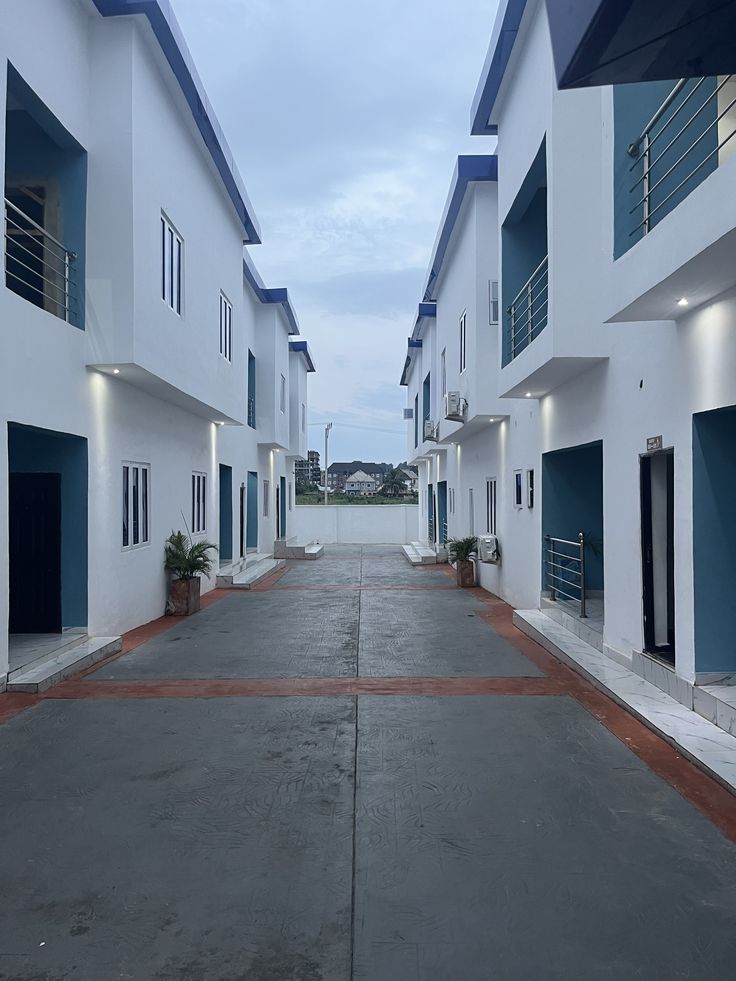
Drive through any Nigerian village on a public holiday and you will see them. Imposing structures sitting behind iron gates, freshly painted walls, generator houses with no generators yet, staircases leading to rooms that have never been slept in. Then the holiday ends, everyone returns to Lagos or London or Houston, and the houses go quiet again for another year. Nigeria has a housing deficit estimated at nearly 15 million units by the Federal Ministry of Housing and Urban Development, and yet some of its most elaborate residential buildings stand almost permanently empty. Understanding why requires going somewhere most real estate conversations never go: into the psychology, history and cultural architecture that drives the decision. At TheHouse48, this is a story that sits at the heart of how Nigerians actually think about property.
The Civil War Root That Never Left
The emotional engine beneath Nigeria's village building culture runs deeper than aspiration. The Igbo experience of the Nigerian Civil War between 1967 and 1970 displaced millions, with properties seized and families uprooted with no recourse. Those who survived absorbed a lesson that no financial seminar ever fully dislodges: what is not rooted can be taken. The response was to plant concrete. A mansion in the village is not primarily a residential decision. It is a territorial one, a physical declaration that regardless of what the world does to you, your place exists and your soil knows your name. The phrase that echoes through generations captures it precisely: if you do not have a house in the village, you are still renting life. It sounds harsh. It also explains why the house gets built long before anyone has any intention of living in it.
Status, Visibility and the Architecture of Social Proof
Beyond the historical roots, the unoccupied village house serves a social function that is deeply rational within its own cultural logic. In Nigerian communities across multiple ethnic groups, the house you build is read as evidence of what you have achieved. It is visible, permanent and impossible to dispute in a way that a bank balance or a foreign investment portfolio is not. For a Nigerian in the diaspora working in a city where no one from their hometown will ever see their lifestyle, the village house becomes the only tangible evidence that the years abroad produced something lasting. This is not vanity in the pejorative sense. It is the conversion of invisible foreign earnings into a form of social capital that the home community can see, assess and respond to with the recognition the builder has been working toward.
The Return Plan That Never Quite Arrives

A significant proportion of unoccupied Nigerian houses were built with the sincere intention of being lived in. The plan was always to return: after retirement, after the children finish school abroad, after one more contract extension. The house is built in advance of that return, kept ready, maintained by a caretaker and periodically visited during the December holidays. What happens in practice is that the return keeps being deferred. The children settle where they were educated. The retiree discovers that the infrastructure of the village, electricity, water, healthcare, road access, does not support the lifestyle they have become accustomed to. The house that was built for return becomes a monument to a plan that remains perpetually five years away.
The Financial Calculation Behind the Sentiment
There is also a rational investment logic woven through the emotional one. Land in the ancestral hometown appreciates differently from urban real estate, but it appreciates. The house built on family land, in a location where no purchase price was paid for the plot, represents a capital deployment with a permanently reduced cost base. For diaspora Nigerians converting pounds, dollars or euros at a favourable exchange rate, the naira cost of construction is significantly discounted relative to their earning currency. The house that sits empty for eleven months of the year is still appreciating. It is still an asset on a balance sheet. And it is still, in the cultural economy of the community, doing the work it was built to do.
TheHouse48 believes that understanding why Nigerians build the way they build is essential to understanding the Nigerian property market as a whole. The unoccupied village house is not a puzzle or a waste. It is a perfectly logical response to a specific combination of history, culture, economics and identity. The question for the next generation of Nigerian property investors is simply whether the same capital, deployed differently, could do all of that and more.
Sign up for our emails and be the first to know about special offers.
Sign In
Comments