
Published on 7/27/2026
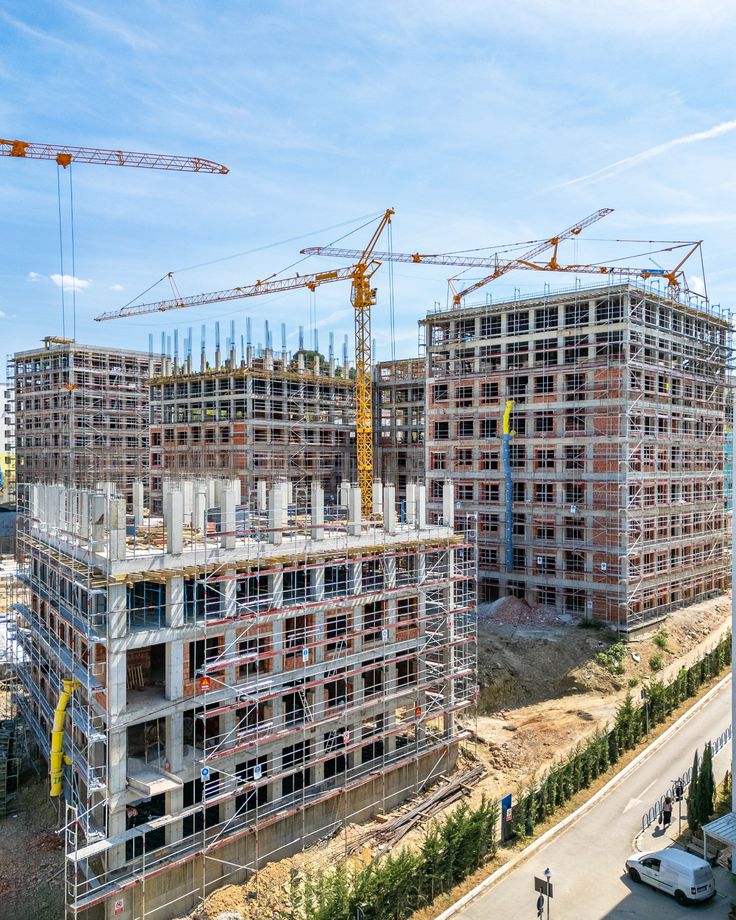
Nigeria has a housing deficit estimated between 20 and 28 million units. Its cities are growing faster than almost any on the continent. Demand for residential and commercial real estate in Lagos, Abuja and Port Harcourt has never been more demonstrable. And yet across those same cities, partly built towers stand open to the elements, gated estates sit at foundation level for years without advancing and buyers who paid instalments on off-plan units receive silence where construction updates should be. The gap between unmet demand and unfinished supply is not an accident. It is the product of identifiable, structural failures that repeat with remarkable consistency. At TheHouse48, understanding these failures is the foundation of every conversation we have with buyers considering off-plan investment in Nigeria.
The Funding Structure That Breaks Under Pressure
Access to capital remained the key bottleneck for Nigerian developers in 2025, limiting the pace of construction, delaying project completion and in many cases pushing ambitious plans into stagnation. The Nigerian development model is uniquely exposed to funding collapse because it relies on a combination of mechanisms that each carry their own fragility. Developers typically fund construction through a mixture of equity, presale instalments from buyers and short-term bank loans. When construction costs rise faster than projected, as they did in 2025 when cement increased by 20 to 30%, steel and reinforcement bars by 25 to 40% and finishing materials by 30%, largely driven by exchange rate depreciation, energy costs, import dependency and supply chain inefficiencies, the funding gap between what was budgeted and what construction actually costs widens rapidly. A developer who priced a development at 2023 cost levels and began construction in 2025 is building in a different financial environment from the one in which the project was modelled. The presale instalments collected cannot stretch to cover the revised cost. The bank loan, priced at between 18 and 25% interest, becomes punishingly expensive to service across a protracted build. The project stalls.
The Cost Push That Makes Completion Economically Irrational
The Nigerian real estate sector is no longer insulated from macroeconomic realities such as inflation, foreign exchange volatility and rising interest rates. These pressures are now directly influencing what gets built, who can afford it and which developers survive. The most insidious version of the unfinished development problem is the one where a developer has not run out of money entirely but has discovered that completing the project at current costs will produce a return below what the units can realistically sell for. In this scenario, the rational economic decision from the developer's perspective is to pause, to wait for costs to ease or prices to rise and to service the minimum obligations in the meantime. The buyer waiting for their unit does not know they are living inside that calculation. The current cost structure of the construction industry is unsustainable for many private players, and without targeted government intervention including the provision of low-interest construction finance, the sector will continue to see a supply contraction despite surging rental demand.
The Planning and Structuring Failures Nobody Admits
Beyond the macroeconomic pressures, a significant proportion of abandoned Nigerian developments fail for reasons that have nothing to do with the external environment. Many developments fail because they are not backed by proper feasibility studies or realistic financial models, with the problem being not a shortage of opportunities but the absence of strong project structuring, disciplined execution and long-term thinking. A development conceived on optimistic assumptions about sales velocity, construction timelines and cost stability will not survive a market that delivers none of those assumptions. The most commonly documented factors in Nigerian project abandonment include payment remittance delays, inadequate fund allocation, improper project costing and design changes mid-construction that invalidate the original budget entirely. A developer who changes the specification after presales have been completed at the original price creates a funding deficit that has no clean resolution without either renegotiating with buyers or absorbing losses that may not be available to absorb.
Lagos's Most Visible Abandoned Projects

Six out of ten of Lagos's largest profiled development projects were still under construction as of early 2026, with the Luxury Collection Hotel Ikoyi, a $350 million project, the Old Federal Government Secretariat Complex and Oluwalogbon Tower among the most documented stalled developments. These are not small or obscure projects. They are major assets in the most watched real estate market in West Africa, and their incomplete status tells a story about the gap between Nigerian real estate ambition and Nigerian real estate execution that every buyer should understand before committing capital to an off-plan purchase.
What Separates the Developers Who Finish
2026 is being framed as a year of separation within the industry. Developers with strong financial discipline, operational efficiency and credible execution models are expected to gain market share, while those relying on hype, aesthetics or weak structures risk being pushed out. The developers who consistently complete their projects share a recognisable profile. They have completed developments that buyers can visit and verify before committing to a new one. They hold construction funds in accounts that cannot be accessed for operating expenses. They price developments based on current build costs rather than aspirational ones. And they structure presale agreements with clearly defined milestones rather than open-ended timelines.
TheHouse48 believes that the Nigerian real estate market will produce extraordinary returns for buyers who commit capital to the right developers. The deficit is real, the demand is real and the opportunity is real. What is equally real is the graveyard of half-built projects behind which buyers are waiting, and the due diligence process that separates one outcome from the other is not optional. It is the entire investment.
Sign up for our emails and be the first to know about special offers.
Sign In
Comments