
Published on 10/8/2026
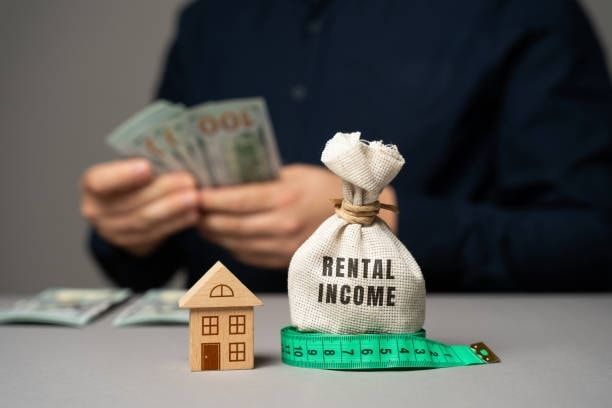
The version of rental property ownership that circulates most widely is the one that works best as a social media caption. A property purchased, a tenant found, rent collected monthly, wealth building quietly in the background while you get on with your life. That version is not a lie. It is an edit. The full picture includes the tenant who damages the property during an otherwise unremarkable tenancy, the month the roof decides to become an emergency, the property manager who charges 10% and still requires managing, and the vacancy that costs more in a single month than most people expect it to. At TheHouse48, the rental property conversation is most useful when it includes everything the promotional version leaves out.
The Passive Income Myth That Costs People Most
The single most damaging misconception about rental property is the word passive. Owning a rental property is more like running a small business than collecting rent and waiting. The business requires finding tenants, screening them, managing relationships when problems arise, coordinating maintenance and repairs, staying current on tenancy law obligations, managing the financial records for tax purposes and either hiring a property manager to handle the operational side or absorbing all of those responsibilities personally. Property managers typically charge between 8 and 12% of monthly rent collected, with 10% the most common figure as of 2026, but hiring one does not eliminate the ownership responsibility entirely. The landlord who delegates to a property manager still has to manage the manager, respond to significant decisions, authorise expenditure above a threshold and remain engaged with the asset's performance. The landlord who manages personally saves the fee and spends the time. Neither version is passive in the way the word is commonly understood.
The Vacancy Cost That Everyone Underestimates
Every rental property investor models their return based on an occupied property generating rent for twelve months of the year. The real number is always less than twelve months, and the cost of vacancy is higher than most buyers calculate. The national rental vacancy rate in Q2 2026 sat at approximately 7.3%, the highest level since at least 2017. Each move-out triggers a turnover cost that includes repainting, deep cleaning, repairs and re-listing fees averaging approximately $1,800 per vacancy event before any significant damage is considered. During the vacancy period, the mortgage payment, insurance, property tax and any HOA fees continue regardless of whether anyone is paying rent. A single month of vacancy on a property generating $2,000 in monthly rent represents a $2,000 revenue loss plus the turnover costs, a combined hit of approximately $3,800 that the annual yield calculation does not account for unless the investor has specifically modelled it.
The Maintenance Reserve That Must Exist Before It Is Needed
Financial planners consistently recommend setting aside 1 to 4% of the property's value per year for maintenance, with 1% as the minimum in a well-maintained property and higher percentages appropriate for older buildings. On a $300,000 property, that is $3,000 to $12,000 per year held in reserve for the expenses that arrive without warning. The category of costs that destroys rental property cash flow most reliably is not the small and frequent maintenance items. It is the large and infrequent capital items: roof replacement averaging $8,000 to $20,000, HVAC system replacement running $5,000 to $12,000, water heater failure at $1,000 to $3,000, electrical panel upgrades in older properties at $2,000 to $6,000. None of these appear in the year a property is purchased and performing well. All of them eventually appear, and the investor without reserves when they do is the one forced to fund the repair from other income or from a property equity line rather than from a fund built for exactly this purpose.
The Tenant Relationship That Nobody Prepares For
The emotional dimension of rental property ownership is the one most consistently absent from investment education. Tenants are people managing their own financial and personal lives, and the intersection of their circumstances with the landlord's financial obligations produces situations that no yield calculation anticipates. A tenant who loses their job mid-lease, a family situation that produces payment delays, a dispute over what constitutes fair wear and tear at the end of a tenancy, a maintenance request that the tenant considers urgent and the landlord considers routine: all of these require judgement, communication and sometimes legal navigation that goes beyond the purely financial. The landlord who handles these situations badly ends up in disputes that cost more in time, legal fees and re-letting disruption than the original issue warranted. The landlord who handles them well builds the long-tenancy relationships that produce the most stable and lowest-friction rental income available.
The Insurance and Tax Reality That Changes the Net Return
Landlord insurance in 2026 runs at a national average of approximately $1,478 to $1,516 per year for standard coverage, up roughly 9% year over year. This is not the same product as homeowner's insurance and cannot be substituted for it. Properties in coastal areas, flood zones or states with elevated climate risk are seeing significantly higher premiums that are no longer predictable from one renewal to the next. Property tax obligations run separately, vary enormously by jurisdiction and are subject to reassessment that can materially increase the annual obligation when a property's assessed value catches up with market value. In jurisdictions conducting reassessment cycles in 2025 and 2026, landlords are receiving tax bills that reflect appreciation that occurred years earlier but was not previously captured in assessed values. The net return after insurance, property tax, management fees, maintenance reserves and vacancy is consistently lower than the gross yield that draws investors to the asset in the first place, and calculating net yield accurately before purchase rather than discovering the components individually after purchase is the difference between a sound investment and a frustrating one.
TheHouse48 believes that rental property ownership remains one of the most powerful wealth-building strategies available and that it delivers on that potential most consistently for investors who went in with accurate expectations rather than optimistic ones. The gap between what rental property promotion promises and what rental property ownership delivers is not insurmountable. It is manageable by anyone who knows in advance what the full picture looks like.
Sign up for our emails and be the first to know about special offers.
Sign In
Comments