
Published on 8/21/2026
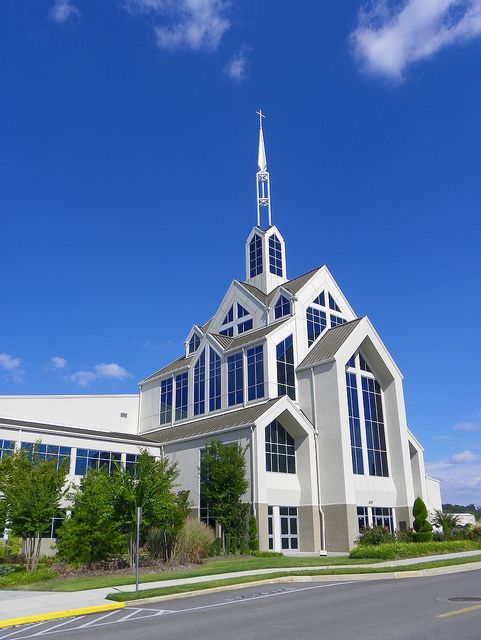
There is a category of landowner in Nigeria whose portfolio almost never appears in property market reports, whose acquisitions rarely generate press releases and whose influence on land availability in some of Nigeria's most strategically important locations is considerably larger than most buyers realise. Nigerian religious institutions, particularly the major Pentecostal churches, the Catholic Church and the larger evangelical denominations, have been accumulating real estate for decades in a pattern that is not concealed but is rarely examined with the analytical attention it deserves. At TheHouse48, the question of who is holding land in Nigeria's key cities matters to every buyer and investor in those markets.
The Scale That Most People Have Not Fully Absorbed
Nigeria's largest churches have grown into institutions whose real estate holdings are inseparable from their operational and financial models. The Catholic Church, which remains the wealthiest Christian institution in Nigeria, operates countless dioceses, schools and hospitals across the country, with land holdings in urban and rural areas that have been accumulated across more than a century of institutional presence. The Redeemed Christian Church of God occupies one of the most striking examples of institutional land control in Nigeria: the Redemption Camp, a purpose-built settlement along the Lagos-Ibadan Expressway that has grown into a self-contained city stretching across thousands of acres, with its own residential estates, commercial properties, schools, universities, a dedicated road interchange and infrastructure that rivals many Nigerian state capitals. Winners Chapel operates a similarly scaled headquarters in Ota, Ogun State, anchoring a campus that includes educational institutions, guesthouses and commercial facilities spread across a land holding that has shaped development patterns across the entire Ota corridor. These are not simply worship spaces. They are institutional land banks operating across decades, accumulating in value as the urban development around them intensifies.
What Religious Institutions Actually Own and How It Works
Nigerian churches generate income through a combination of tithes, donations, business ventures, media networks and real estate, and many of the largest now own prime properties that appreciate over time and generate substantial revenue. The real estate model within these institutions typically operates across three distinct categories. The first is operational property, the worship centres, administrative headquarters, schools, universities and hospitals that form the visible face of institutional presence. The second is investment property, commercial buildings, office complexes and retail facilities that generate rental income used to fund institutional operations. The third is land banking, strategic acquisition of undeveloped plots in corridors where future development is anticipated, held without immediate use but appreciating as urbanisation expands toward them. The third category is the least visible and the most significant for surrounding property markets, because land held by an institution with no commercial pressure to sell simply does not enter the market regardless of what price a developer or buyer might be willing to offer.
The Tax Question That the Nigeria Tax Act 2025 Has Reopened
The Nigeria Tax Act 2025, which took effect January 1, 2026, has introduced new complexity into the question of how religious institutions account for their income-generating properties. The Act places rental income within the framework of total taxable income for landlords at the applicable marginal rate. The long-standing position that religious organisations are broadly exempt from taxation in Nigeria has not been legislatively overturned, but the distinction between genuinely religious activities and commercially oriented property income is increasingly coming under scrutiny. A church that owns a commercial plaza and collects market-rate rents from business tenants is generating income that sits in a different legal category from tithes or donations, and the Nigeria Tax Act 2025's more comprehensive framework for capturing rental income creates a legal question about the tax status of that income that has not yet been definitively resolved through published FIRS guidance as of mid-2026.
What It Means for Buyers and Investors in Affected Areas
The practical market impact of large-scale institutional land holding operates through two primary channels. The first is supply suppression. When significant land parcels in a corridor or district are held by an institution that is not a commercial seller, the available supply of developable land in that area is structurally reduced in ways that standard market analysis does not always capture. A developer scouting for land near the Redemption Camp corridor or in areas adjacent to major church campuses in Lagos, Abuja or Port Harcourt is competing in a market where a meaningful proportion of the most strategically located land will not come to market at any commercially rational price. That supply constraint supports values for what does come available, but it also fundamentally limits the development potential of entire districts. The second channel is infrastructure leverage. The major Nigerian religious institutions have invested in roads, power and water infrastructure serving their campuses in ways that have materially improved the investment environment for surrounding areas, making the land adjacent to major church campuses a beneficiary of institutional capital expenditure that would not otherwise have arrived.
TheHouse48 believes that understanding who holds land in any market is as important as understanding what that land is worth. In Nigeria's key urban and peri-urban corridors, religious institutions are among the most consequential landowners operating, and their decisions about what to develop, what to hold and what to eventually release will shape the supply environment for buyers and investors in those markets for decades to come.
Sign up for our emails and be the first to know about special offers.
Sign In
Comments