
Published on 9/2/2026
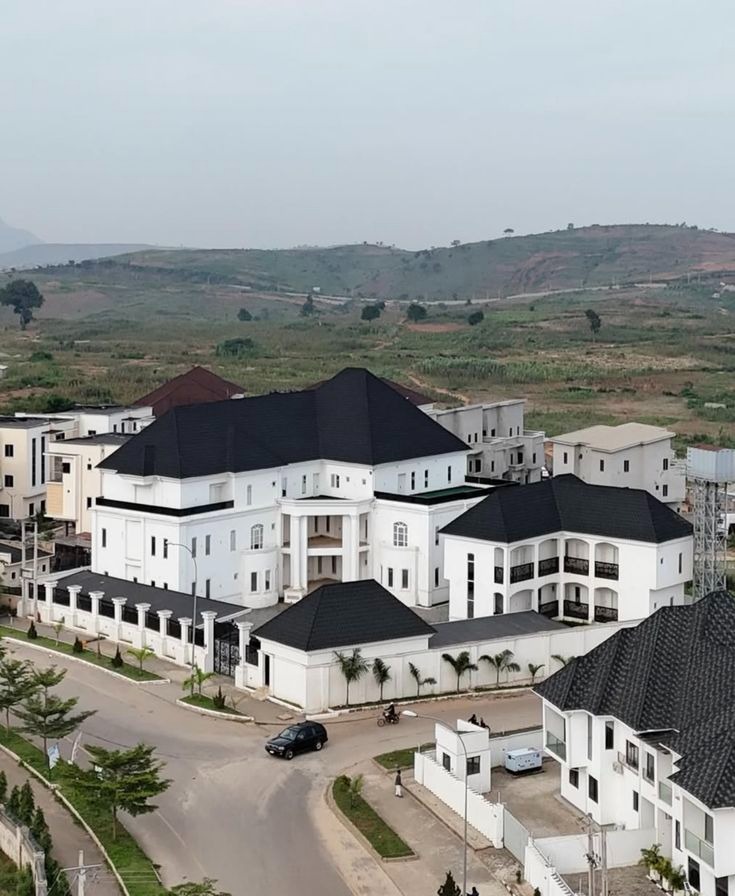
Five years ago, the case for buying in Abuja's satellite towns required a certain willingness to be early. The roads were works in progress, the estate developers were newer names, and the premium corridors of Maitama and Asokoro were still the default answer to any serious property conversation in the capital. The investors who bought in Lugbe, Karsana, Life Camp and Dakibiyu between 2020 and 2022 were not making speculative bets. They were reading a pattern that Abuja has demonstrated consistently across its entire development history: infrastructure arrives, prices follow, and the buyers who waited for the infrastructure to be finished paid for the certainty that the early buyers captured at a discount. At TheHouse48, that pattern is now clearly visible in the data, and the next iteration of it is already underway.
What the Early Movers Actually Captured
The areas that defined the smart money positioning in Abuja between 2019 and 2022 are now the areas generating the most discussion in 2026, and the return trajectory they delivered over that period is specific enough to be instructive. Lugbe, which was priced the way peripheral Abuja satellite towns typically price before road infrastructure makes them accessible, has since repriced in a way that reflects its position within the airport corridor and its absorbing population from buyers priced out of central districts. Life Camp followed a similar trajectory, with gated estate development preceded by road improvements that transformed a previously slow commute into a viable daily option for professionals working in central Abuja. Dakibiyu and Karsana, which were buying opportunities at land prices that would draw skepticism from investors focused only on established addresses, have both seen consistent appreciation driven by the same infrastructure-and-population-pressure mechanism that has defined every round of Abuja's outward expansion since the early 2000s.
Where the Pattern Is Repeating Right Now
The 2026 version of this story is already identifiable in the data for buyers willing to read it. Kuje is the area that most closely mirrors where Lugbe was priced before Lugbe repriced. It sits within the same airport corridor, carries an FCT address and benefits from direct adjacency to Centenary City, a 1,200-hectare master-planned smart city development that Lugbe never had as a catalyst. Titled plots in documented Kuje estates were starting from ₦3 million for 250 square metres as of early 2026, with FCT Minister Nyesom Wike publicly commending Kuje road construction quality and pace in 2025 and 2026. The infrastructure signal is not anticipated. It is active. Kuje is the clearest current example of an area priced at the early stage of a trajectory that the Abuja market has completed several times before, and the round-trip transaction cost structure of Abuja property, running 10 to 15% of property value, means the minimum realistic holding period for capturing the full return is five to seven years, which is exactly the horizon that produced the strongest outcomes for the five-year-ago cohort of satellite town buyers.
The Infrastructure Signal That Separates Kuje from the Noise
The FCTA has allocated over 70% of its ₦1.7 trillion 2025 budget to capital projects, with the infrastructure focus concentrated on transportation, utilities and urban development in exactly the corridors where satellite town expansion is most active. A metro network expansion with new lines planned to connect satellite towns to the city centre would, when delivered, reprice the accessible satellite towns in a manner that London's tube extensions, Dubai's metro and every comparable transit expansion have demonstrated in their respective markets. The metro timeline remains a longer-horizon catalyst. The road projects linking Kuje and other satellite towns to established districts are the near-term signal, already in execution and already moving land prices in the corridors they serve.
What This Means for Buyers Considering Abuja Now
The best return in Abuja has never come from the most prestigious address. It has consistently come from the right address at the right moment in its development cycle, which is a different calculation from the one most buyers make when they default to Maitama or Asokoro because those names are already established. Asokoro 2, Kuje and the continued expansion corridors around Life Camp and Dakibiyu represent the current iteration of the timing opportunity that produced strong returns for the 2020 to 2022 cohort. The difference between those returns and what a 2026 buyer captures will depend almost entirely on how much of the infrastructure-driven appreciation has already been priced in versus how much remains to arrive.
TheHouse48 believes that the Abuja satellite town story is not about finding the next undiscovered area for its own sake. It is about understanding that Abuja's development pattern is legible and consistent, that infrastructure precedes price growth reliably enough to be used as an investment framework, and that the investors who read that framework early and hold with conviction are the ones the market consistently rewards.
Sign up for our emails and be the first to know about special offers.
Sign In
Comments