
Published on 7/8/2026
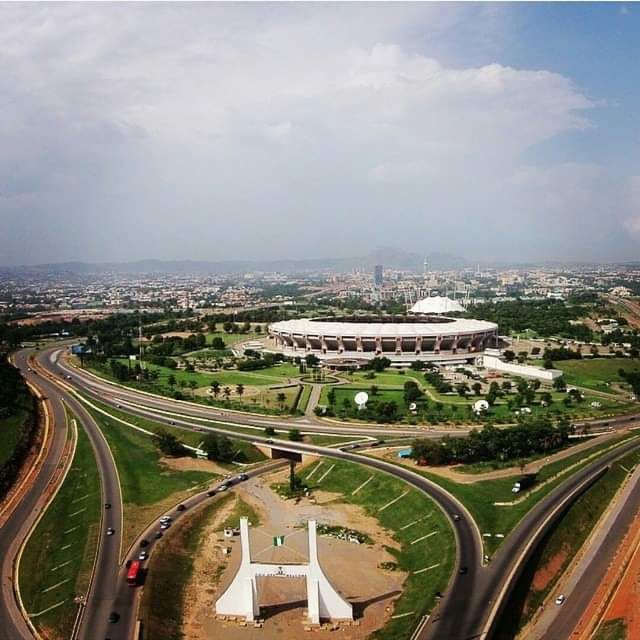
There is a version of the Abuja property story that gets told at investment seminars and in developer brochures. It features rising land values, premium tenants, a stable political capital and a market that quietly outperforms the noise of Lagos. That version is not wrong. What it leaves out is the part where the government shows up with an enforcement notice, seals the gate and revokes the title on a property someone spent years building and paying for. In 2025 and into 2026, that part of the story has been playing out across Abuja's most prestigious districts in ways that every investor in this market needs to understand clearly. At TheHouse48, we believe that protecting a real estate investment begins with understanding the legal environment it sits inside.
What Actually Happened in 2025
The scale of what the Federal Capital Territory Administration executed in 2025 was not a routine compliance exercise. On March 18th 2025, the FCTA announced that 4,794 properties, part of a broader list of 8,375 properties in default, had failed to pay ground rent for at least a decade, with some defaults running as far back as 43 years. The administration disclosed that the property owners collectively owed more than N6.96 billion in ground rent. Following a grace period that elapsed, the FCTA commenced the physical takeover of the 4,794 revoked properties from May 26th 2025, sealing them off and restricting access. The affected districts were not peripheral or obscure. They included Central Area, Garki I and II, Wuse I and II, Asokoro, Maitama and Guzape, the core of Abuja's premium residential and commercial real estate market, where plots routinely trade between N500 million and N2 billion. In a separate action in November 2025, an additional 1,095 property titles were revoked, covering 835 for ground rent arrears and 260 for land-use contraventions. The combined effect was a market-wide confidence shock. Estate agents reported a 25 to 40% drop in inquiry volumes since the revocation lists were published, with several high-net-worth buyers pausing transactions entirely.
The Zoning Risk That Buyers Consistently Underestimate
Beyond unpaid ground rent, the FCTA has been equally aggressive on zoning violations. In March 2026, FCT Minister Nyesom Wike ordered the demolition of an entire estate built on a plot originally allocated for park and recreation use, which had been converted to residential without approval. He stated that the allocation would be revoked and warned that deliberate violations of land-use approvals would not be tolerated regardless of who was involved. The legal basis is unambiguous. Abuja is a strictly planned city where every plot is zoned for a specific purpose, and under the Land Use Act, particularly Section 28, the government is empowered to reclaim land for violations of occupancy terms. A Certificate of Occupancy is a 99-year statutory lease issued by the FCT Minister. It is the only title fully recognised by banks as collateral and offers the strongest protection against government revocation or demolition. Properties operating on a Right of Occupancy rather than a full C of O carry measurably higher exposure to enforcement action.
The Secondary Market Risk Nobody Discusses
The FCDA revoked 4,794 land titles in 2025 for non-development, and some of those titles entered the secondary market shortly after revocation, priced well below comparable plots. A buyer who purchases a revoked title without verifying its status at AGIS, the Abuja Geographic Information Systems registry, discovers the problem only when government officials appear on site. This is not a theoretical risk. It is a documented pattern that has caught buyers who assumed a low price reflected motivated selling rather than a fundamental title defect.
What the Market Looks Like Coming Out of This
The revocation cycle is not only a cautionary tale. Legal analysts and market observers note that once arrears are cleared and a transparent digital payment portal is fully operational, clean titles in the affected districts may command a premium, similar to the 20 to 30% price surge seen after the 2019 to 2020 regularisation exercise. Banks are already tightening mortgage approvals, now demanding fresh FCTA clearance letters and evidence of 2024 to 2025 ground rent receipts before advancing funds. This tighter standard, while disruptive in the short term, is producing a more verifiable title environment than existed before.
TheHouse48 works with buyers who understand that in the Abuja market, the due diligence process does not end with viewing a property or agreeing a price. It ends when the title has been verified at AGIS, the ground rent history is clean, the zoning use matches the intended development and every statutory obligation attached to the land has been confirmed. The government showing up is not an unpredictable event in this market. It is a predictable consequence of skipping t
hose steps.
Sign up for our emails and be the first to know about special offers.
Sign In
Comments