
Published on 9/29/2026
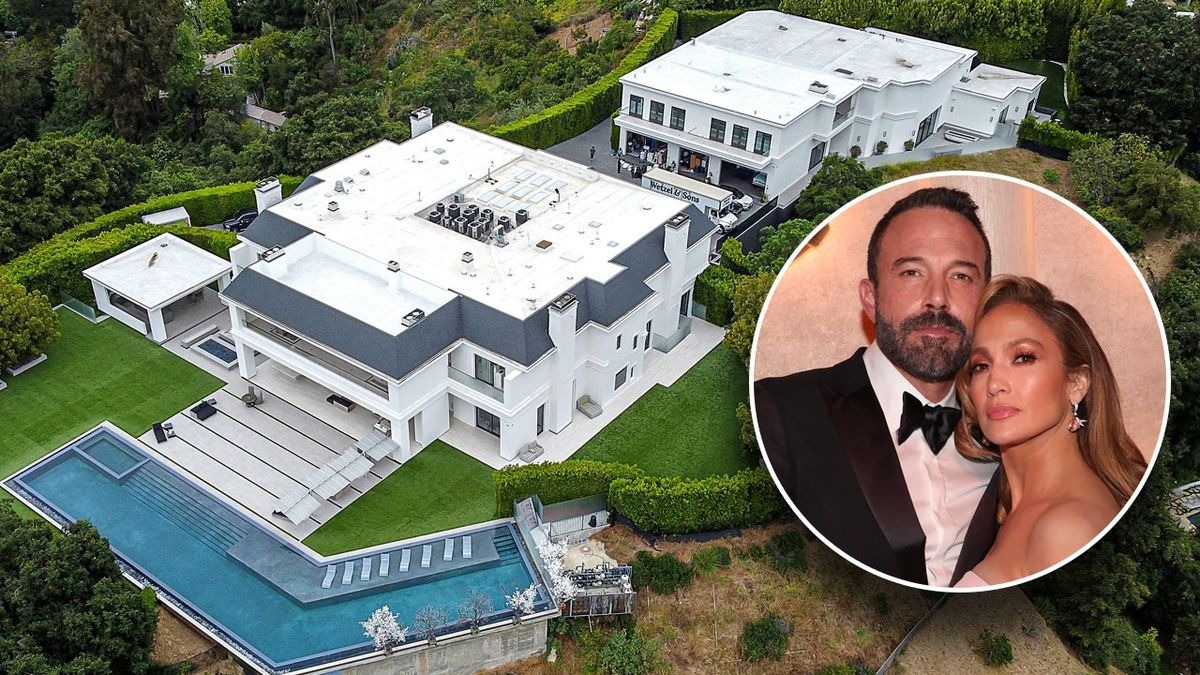
Jennifer Lopez and Ben Affleck bought their Beverly Hills estate together in May 2023 for $60.85 million. It had twelve bedrooms, twenty-four bathrooms, thirty-eight thousand square feet and a basketball court, and it was intended as the permanent home of what the media had been calling one of Hollywood's great second-chance love stories. Two years later the divorce was finalised, and by April 2026 Ben Affleck had transferred his entire stake in the property to Lopez at no cost. She is now the sole owner of a $60 million asset that has not yet found a buyer. The situation is complicated, instructive and more strategically interesting than it first appears. At TheHouse48, the real estate decisions embedded in this story are worth examining precisely.
How the Ownership Transfer Happened
The settlement agreement between Lopez and Affleck included a property transfer recorded as a transfer among spouses, with Affleck surrendering his entire interest in the Beverly Hills residence without receiving payment for it. Under the terms of the arrangement Lopez became solely responsible for all expenses associated with any future sale, including broker commissions, taxes and closing costs. The source-level reporting on the negotiation suggests Affleck was primarily motivated by exit. A source close to the deal noted that Affleck never felt settled in the property and wanted the financial and emotional tie severed cleanly rather than prolonged through a contested joint sale process. Lopez, by contrast, believed the property could achieve a higher price than the market was offering and preferred to retain control of the sale timeline. The result is a structure where one party absorbed the entire asset and the entire risk in exchange for sole decision-making authority over an asset that has been on and off the market since June 2024.
The Sale That Has Not Happened and Why
The Beverly Hills property was first quietly shopped off-market in June 2024. It was publicly listed in July 2024 at $68 million. After ten months without a buyer it was reduced to $59.5 million. It was then taken off the market entirely in July 2025 in what both parties described as a joint decision made in response to market conditions. By April 2026 Lopez was the sole owner and the property had been relisted. The challenge is specific and well-documented by real estate professionals watching the listing. At the $60 million price point, the Los Angeles luxury market in 2026 presents a thin and highly selective buyer pool. The property's profile, a couple's primary residence decorated and configured for a large blended family, makes it a specific fit for a specific type of buyer rather than a universally appealing trophy asset. Each failed listing cycle has added to the days-on-market history that informed buyers can see and use to apply downward price pressure.
What Lopez Is Actually Doing With Her Property Portfolio
The Beverly Hills mansion represents only one position in what is now a restructured personal property portfolio. Lopez purchased an $18 million Hidden Hills estate separately, renovated it to her own specification and moved in during May 2026, describing it as her Barbie dream house. She is simultaneously managing the potential sale of the Beverly Hills property as a standalone investment decision rather than as the family home it was originally acquired to be. The shift from co-owner of a shared marital property to sole owner of a commercial real estate position is a meaningful strategic transition, and it places Lopez in the position of deciding when market conditions justify selling versus holding an asset that is costing her in carrying costs for every month it remains unsold.
The Broader Lesson for Anyone Holding an Unsellable Asset
The JLo mansion story is extreme in its scale and context but the underlying dynamic is entirely ordinary. A property purchased for a specific relationship purpose, configured and renovated around the people who lived in it, that must then be sold to a market of buyers who did not share that context is harder to sell than a property purchased as an investment from the start. Buyers at every price point respond to the story a property tells, and a property that publicly tells the story of a failed marriage must overcome that narrative in addition to meeting all the standard requirements of location, specification and price. The sellers who navigate this most effectively are the ones who reframe the asset as the next buyer's opportunity rather than the current owner's history, which requires presentation, pricing and patience in exact proportion to how prominently the previous narrative has played out in public.
TheHouse48 believes that the JLo mansion situation illustrates one of the most practically useful truths in real estate. Ownership of an asset is not the same as control of what that asset is worth at any given moment, and the gap between what was paid, what is asked and what the market will pay is determined by the buyer's perception of value rather than the seller's investment in the property. Managing that gap is the entire job of a skilled sale strategy, regardless of whether the property is worth $60 million or sixty thousand.
Sign up for our emails and be the first to know about special offers.
Sign In
Comments