
Published on 9/9/2026
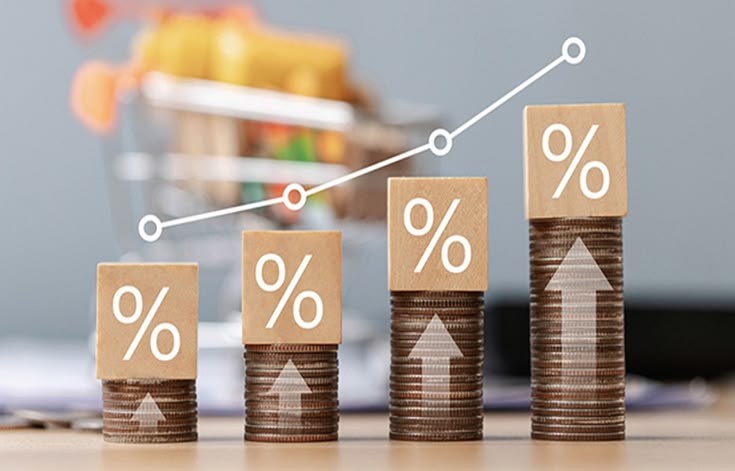
The question arrives at the end of every rate cycle and gets answered differently depending on who is asking it. For buyers who remember the near-zero borrowing environment of 2020 and 2021, current rates feel punishing enough to make the entire asset class seem less compelling. For investors who have been in property across multiple cycles, the question looks different because the answer has never really changed. Real estate remains a viable investment in high rate environments. What changes is which strategies work, which do not and how much more precisely a buyer needs to think before committing. At TheHouse48, this is one of the most practically important questions in the current market.
What High Rates Actually Do to Property Investment
The direct effect of elevated interest rates on property investment runs through two channels simultaneously. The first is financing cost. Investment property mortgage rates in the US were running at 7.5% or higher for most of 2026, compared to sub-4% rates available just three years earlier. That difference on a $400,000 mortgage adds several hundred dollars to the monthly repayment and compresses the spread between rental income and debt service that makes a leveraged property purchase cash flow positive. The second channel is demand compression. High rates keep buyers out of the purchase market, which simultaneously increases the pool of renters and reduces competition for investment properties. These two effects work in opposite directions, which is precisely why the blanket answer of whether real estate is a good investment in a high rate environment is always incomplete. The rate raises your cost and increases your demand at the same time.
The Strategies That Work When Rates Are High
The most consistently cited adaptation to a high rate environment in 2026 is the DSCR loan, Debt Service Coverage Ratio financing, which qualifies an investor based on the income a property generates rather than their personal income or tax returns. This shift has made the current market for investment property financing significantly more accessible than the headline rates suggest for buyers whose rental income supports the debt service. A property generating $3,000 per month in rent with a $2,000 monthly mortgage payment has a DSCR of 1.5, which most lenders accept as qualifying. The rate environment creates the rental income. The rental income qualifies the financing. For buyers running this calculation correctly, high rates are not a barrier. They are the mechanism that makes the income case viable.
A second strategy that has gained significant traction in 2026 is the assumable mortgage, where a buyer takes over an existing loan at its original rate rather than refinancing at current market rates. Many FHA, VA and USDA loans originated during the low rate era are assumable, meaning qualified buyers can take over existing loans with rates between 2.75% and 4%, dramatically improving monthly cash flow and long-term returns compared to financing at current market rates. A property with an assumable 3% loan may produce stronger returns than an identical property financed at 7.5%, even when the purchase price is higher. This is one of the clearest structural advantages available to buyers in the current environment and one of the least widely understood.
Why the Supply Argument Still Holds
The structural case for real estate as an investment does not depend on rates alone. The US built 1.4 million new homes in 2025 against a demand deficit estimated at 3.8 million units. The UK, Australia, Canada and most major European markets are running comparable shortfalls. High interest rates have slowed construction further by making development financing more expensive, which means the supply gap is not closing, and the fundamental demand for housing as a non-optional human requirement is not rate-sensitive. Property appreciation was 1.4% from Q1 2025 to Q1 2026 in markets like Orange County, which looks modest on paper, but nominal appreciation on a leveraged asset at any positive rate still outperforms cash held at equivalent rates once the leverage multiple is applied. There are no signs that home prices are going to drop in supply-constrained markets, and the long-term case for holding a well-located property through a high-rate period and refinancing when rates ease is one that every previous rate cycle has validated.
The Real Standard for 2026
Successful real estate investing in 2026 requires smarter decision-making than the low-rate era demanded. Investors now need to focus more carefully on location, rental demand, financing costs, legal security and long-term market fundamentals instead of simply expecting fast price increases. The margin for error is narrower. A property that cash flows positively at 7.5% rates in a market with genuine rental demand and a structural supply shortage is a better investment than a property that required 3% rates to make sense. The rate environment has not made property a bad investment. It has made undisciplined property investment a more visible problem than it was when cheap money obscured every mistake.
TheHouse48 believes that the question is not whether real estate is still a good investment when rates are high. It is whether the specific property, in the specific location, at the specific price, financed on the specific terms available to you right now, produces a return that justifies the commitment. That has always been the right question. High rates simply make it harder to avoid answering it honestly.
Sign up for our emails and be the first to know about special offers.
Sign In
Comments