
Published on 10/1/2026
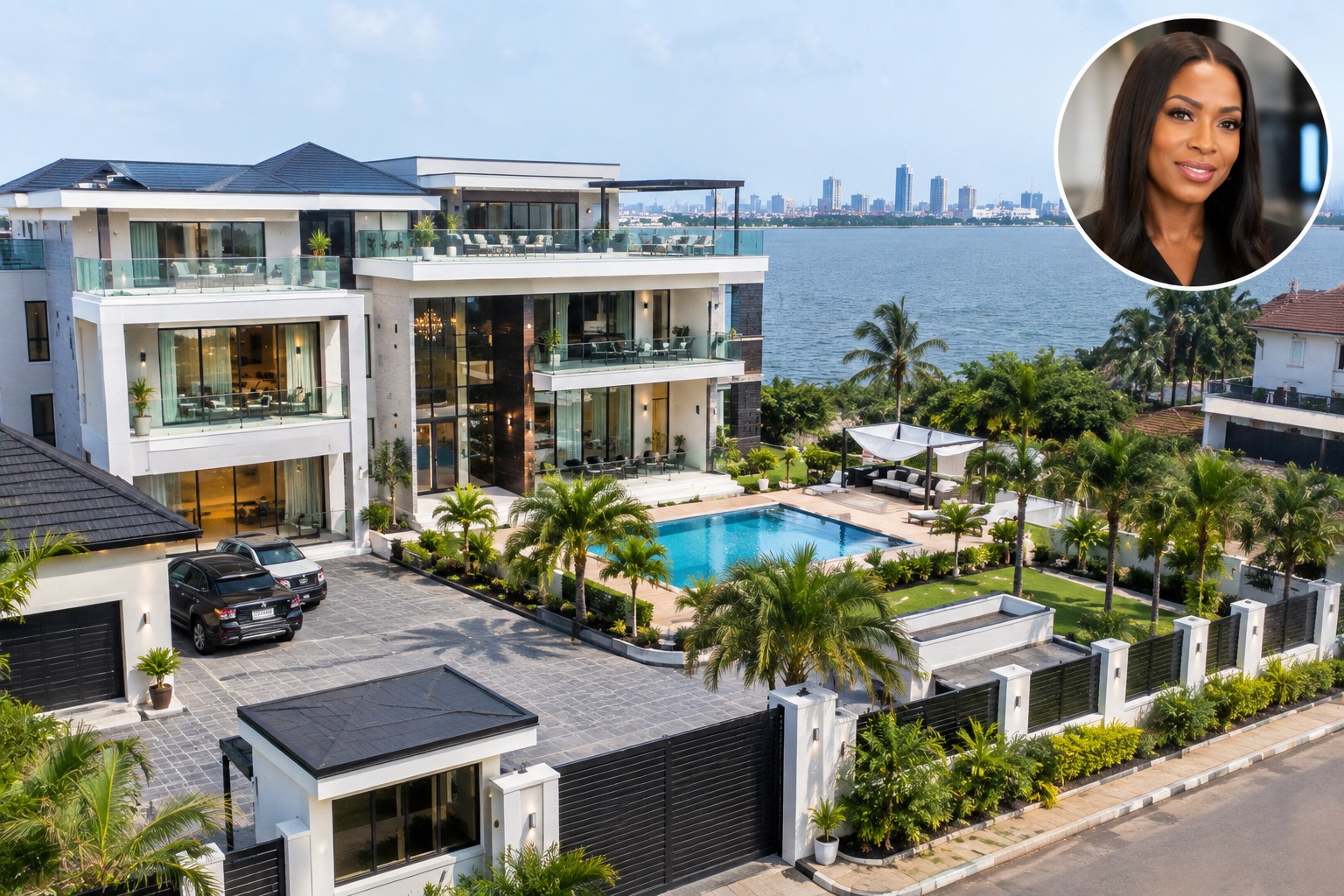
In 2016, Linda Ikeji did something that made headlines for reasons that went far beyond real estate. A self-made woman, a blogger who had built one of Nigeria's most visited websites without investors or institutional backing, walked into Banana Island and bought a mansion reportedly worth ₦600 million in cash. The reaction ranged from admiration to outright disbelief. Most of the conversation focused on her as a person. Almost none of it focused on the investment she had just made. Nearly a decade later, that investment is the more interesting part of the story. At TheHouse48, the Linda Ikeji Banana Island purchase is one of the most instructive real estate decisions made by a Nigerian woman in the past twenty years, and the numbers that have followed it deserve to be examined carefully.
What Was Bought and What Was Confirmed
The mansion Linda Ikeji acquired on Banana Island is a large-scale residential property featuring eleven rooms, a basketball court, a home gym and a kitchen that drew considerable attention on social media when interior images were shared. The acquisition price reported at the time was approximately ₦600 million. By December 2018, just two years after the purchase, Ikeji confirmed the valuation herself on Instagram: her house was now valued at ₦850 million. That is a documented, self-confirmed figure, not an estimate. In two years, the property had appreciated by approximately ₦250 million, a gain of roughly 42% on the original purchase price, without a single renovation being completed to drive the increase. The Banana Island market was doing the work simply by existing in the condition it has always existed in: an island of approximately 536 plots with underground electrical infrastructure, central sewage, fibre-optic internet and 24-hour gated security, where supply is permanently constrained and demand from Nigeria's ultra-high-net-worth buyers never meaningfully softens.
What the Market Has Done Since 2018
The 2018 valuation of ₦850 million is the last confirmed figure available for the property itself. What has happened to Banana Island as a market since then, however, is extensively documented and produces a clear directional picture. Land prices in Banana Island surged by more than 540% between 2020 and 2025 alone, reaching approximately ₦3.05 million per square metre in 2025 according to the Lagos Residential Market Report 2025 by Edala Development, rising from an average of ₦470,000 per square metre in 2020. In the sales market, a four-bedroom home that was valued at ₦350 million in 2020 had reached ₦800 million by 2025. Five-bedroom detached mansions on the island, the category most comparable to Linda Ikeji's property, are currently listed at between ₦2.5 billion and ₦10 billion depending on size, specification and exact plot position, with the most expensive listing documented at ₦5 billion for a six-bedroom detached house. The rental market has moved in parallel: a duplex on Banana Island now commands between ₦80 million and ₦100 million per year, compared to figures that would have been a fraction of that a decade ago.
The Estimated Position Today
Applying the documented appreciation trajectory to the ₦850 million confirmed 2018 valuation of a large-scale Banana Island mansion produces an estimated current value that sits comfortably between ₦2 billion and ₦3.5 billion as of 2026, using the conservative end of the market data available for comparable properties. That is not a stated fact and is presented here explicitly as a market-data-based estimate rather than a confirmed valuation. What is not an estimate is the directional conclusion it supports: the ₦600 million purchase in 2016 has produced a return that no savings account, no fixed deposit and no alternative naira-denominated investment available at the same time could have remotely matched. The market that Linda Ikeji entered has appreciated at a rate that was not accidental and was not temporary. It was structural, driven by the permanent scarcity of a 1.63 million square metre island where nearly all land is already developed and where new supply can only come from demolition and rebuild.
The Investment Lesson That Belongs to Every Reader
The Linda Ikeji purchase is discussed primarily as a story about her. The investment principle it demonstrates belongs to anyone. Banana Island in 2016 was already expensive. The ₦600 million price point required capital that most Nigerians will never have access to. But the principle behind the decision, buying into a supply-constrained market with genuine demand fundamentals, with permanent infrastructure and the kind of address that never falls out of favour with the buyer pool that can afford it, applies at every price level. The Lekki Phase 1 equivalent of 2016's Banana Island purchase exists somewhere in Nigeria's market today. The Abuja corridor that will look in 2030 the way Katampe Extension looks now is identifiable through the same methodology that would have identified Banana Island's trajectory in 2016. What Linda Ikeji did instinctively and correctly was commit to the market at the right moment rather than wait for the market to announce itself.
TheHouse48 believes that the most expensive mistake in Nigerian real estate is not overpaying for the right asset. It is waiting until the right asset has become obviously right to everyone else, and discovering that the price has already reflected everyone else's conclusion.
Sign up for our emails and be the first to know about special offers.
Sign In
Comments