
Published on 10/5/2026
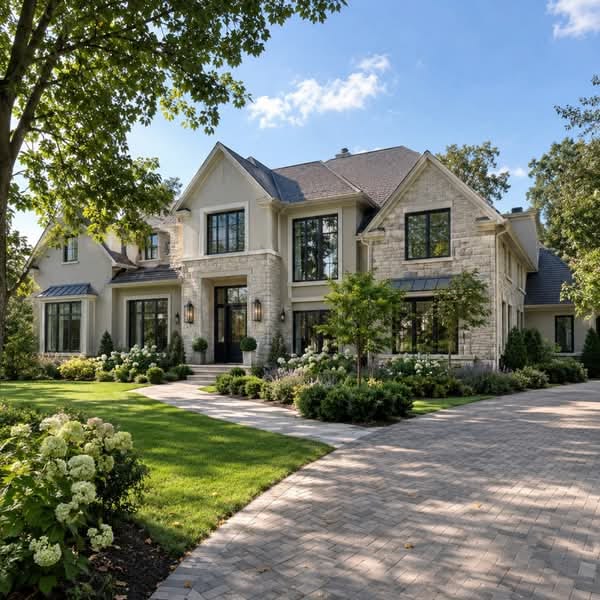
The answer most buyers get to this question comes from a lender, and the lender's answer is almost always wrong for the wrong reasons. Lenders tell you the maximum they are prepared to advance against your income, debt profile and the property's value. That number is not the same as the amount you can comfortably spend and still sleep well, save consistently and absorb a financial disruption without missing a payment. The gap between what a lender will approve and what you should actually borrow is one of the most consistently expensive mistakes in residential property finance. At TheHouse48, the affordability question deserves a precise answer built from real numbers rather than a pre-approval letter.
The Rules That Set the Baseline
Three frameworks dominate how lenders and financial advisors calculate home affordability, and understanding all three tells you more than any single one does alone. The 28% rule states that your monthly housing payment, covering principal, interest, property taxes and insurance, should not exceed 28% of your gross monthly income. On a gross monthly income of $8,333, representing a $100,000 annual salary, that ceiling sits at approximately $2,333 per month. The 28/36 rule extends this by requiring that all monthly debt payments combined, including the new mortgage, student loans, car payments and credit cards, should not exceed 36% of gross monthly income. A buyer earning $8,333 per month who already carries $500 in monthly debt payments has a back-end ceiling of $3,000 total, leaving $2,500 for the housing payment. The Ramsey method, the most conservative framework, caps total housing costs at 25% of take-home pay after taxes rather than gross income, and recommends a 15-year fixed mortgage. This produces a noticeably smaller number than the lender's maximum but also leaves meaningful room for retirement contributions, emergency savings and the financial resilience that protects a household when income disrupts.
What the 2026 Market Numbers Actually Produce
The median US home sale price as of mid-2026 is approximately $439,000, against a 30-year fixed mortgage rate averaging around 6.37 to 6.5%. A $400,000 mortgage at 6.5% over 30 years produces a monthly principal and interest payment of approximately $2,528. Adding property taxes averaging $300 to $400 per month and homeowner's insurance of $150 to $200 per month brings the realistic total monthly housing cost to approximately $3,000 to $3,500 on a $400,000 loan. To afford that comfortably under the 28% rule requires a gross monthly income of approximately $10,700 to $12,500, translating to an annual income of roughly $128,000 to $150,000. To afford the median US home comfortably requires an income somewhere around $117,000 with 20% down or $135,000 with 5% down, which tells you a great deal about why affordability feels stretched for so many buyers in the current market.
The Hidden Costs That Break the Calculation
The mortgage payment is the number buyers focus on and it is not the number that determines whether ownership is sustainable. Homeowners pay an average of $21,400 per year in costs beyond their mortgage payment, with maintenance alone running over $8,800 annually. Private Mortgage Insurance, required when the down payment is below 20%, adds between $50 and $200 per month on a $300,000 mortgage depending on the lender and the borrower's credit profile. HOA fees in communities that require them average $200 to $600 per month and are often the cost that pushes a theoretical budget past its practical limit. Utility costs for a larger home exceed what a buyer previously paid in a smaller or rented space, a transition cost that is entirely invisible in any affordability calculation but shows up in the first monthly bill. The buyer who budgets for the mortgage and nothing else is not budgeting for what ownership actually costs, and the difference between those two numbers is the financial pressure that produces mortgage stress within the first two years of ownership.
The Practical Calculation That Actually Works
The most reliable affordability framework for 2026 is to start with take-home pay rather than gross income, subtract all current monthly obligations that will continue after the purchase, and apply 25 to 28% of the resulting figure to housing costs including tax and insurance. Then add a monthly maintenance reserve of 1% of the property's purchase price divided by twelve, model the property tax rate for the specific jurisdiction at the assessed value, and include any HOA fee at the full disclosed amount. The number that emerges from that calculation is the sustainable monthly housing cost rather than the lender-approved maximum, and properties priced to produce a payment at or below that figure represent affordable purchases in the fullest sense of the word. Buying at the edge of lender approval and using nearly all available cash on hand for the down payment leaves no margin for the ordinary events, a roof repair, a job disruption, an unexpected medical bill, that every household eventually faces.
TheHouse48 believes that affordability is not a lender's determination. It is a personal financial calculation that accounts for the full cost of ownership, the resilience the buyer needs to maintain and the life they are trying to build inside the property, not just around it. The question is not how much house you can get approved for. It is how much house you can own without it owning you.
Sign up for our emails and be the first to know about special offers.
Sign In
Comments