
Published on 8/27/2026
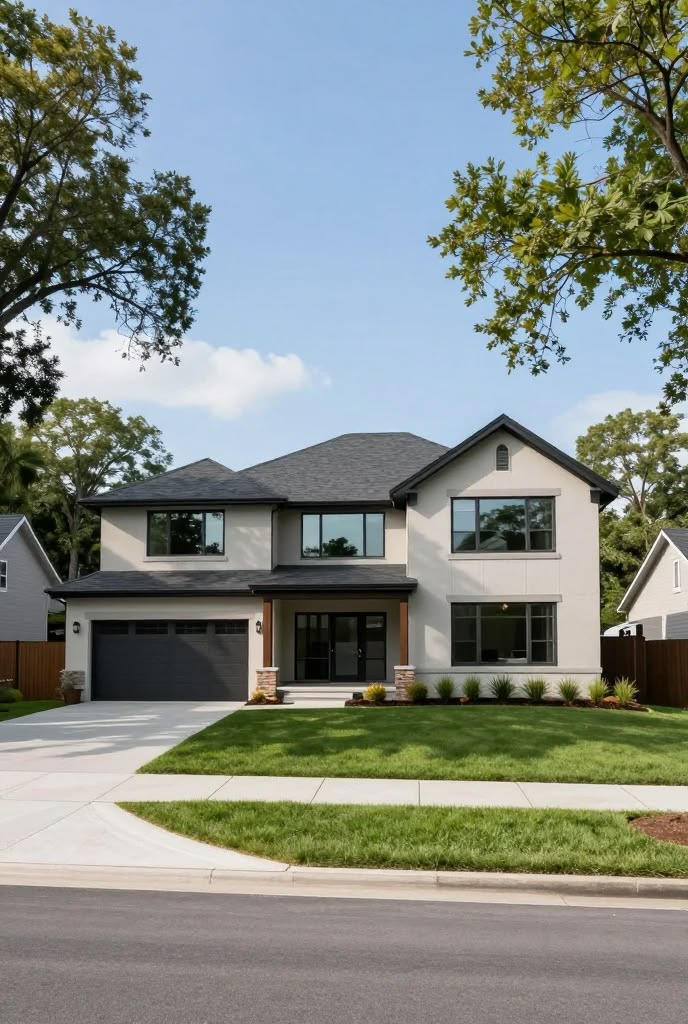
For most of the past decade, the dominant logic in Nigerian real estate development pointed upward. The premium market delivered the fastest sales, the clearest profit margins and the prestige that attracted further investment. Developers competed for the Ikoyi buyer, the Maitama buyer, the Banana Island buyer, and the middle of the market was largely left to manage with whatever the informal sector could produce. That logic is changing, and the shift is not ideological. It is numerical. The premium market has become congested, the middle-class market has become enormous and the developers who read that arithmetic early are now building in places and at price points that most of their competitors have not yet taken seriously. At TheHouse48, this realignment is one of the most consequential developments in Nigerian real estate in 2026.
The Numbers That Changed the Calculation
The scale of the unmet demand in Nigeria's middle market is not ambiguous. Nigeria's housing deficit stands at over 22 million units, with the overwhelming majority of that gap concentrated not at the luxury end but in the segment serving households earning between ₦500,000 and ₦5 million annually, the working professionals, civil servants, teachers, nurses, small business owners and junior corporate employees who form the bulk of Nigeria's urban population. Over 60% of Nigeria's population is under 25, and every year millions move from rural areas into cities, entering a housing market where supply at their income level is structurally inadequate. Annual rents for standard two-bedroom apartments surged by over 50% in some areas in 2025, with units in accessible but non-premium locations commanding up to ₦2.5 million per year, reflecting the intensity of demand that the supply side has not kept pace with. As of 2026, an average flat or apartment in Nigeria costs around ₦95 million, with terrace houses at approximately ₦220 million and detached houses at approximately ₦450 million. These figures are denominated in naira that has lost significant value, meaning the dollar-equivalent entry costs have become increasingly accessible for diaspora buyers while remaining out of reach for domestic middle-class buyers relying on naira savings.
What the Middle-Class Shift Actually Looks Like on the Ground
The practical expression of this shift is visible in the corridors where new development activity is most concentrated. New middle-class estates in Ibadan are fetching ₦5 to 7 million per plot, compared to land that was ₦250,000 five years ago that now trades at ₦800,000 to ₦1.5 million. Satellite towns around Abuja including Kubwa and Lugbe are absorbing middle-income demand that the city centre can no longer accommodate at accessible price points, with moderate price increases of 8 to 10% annually projected for these corridors through 2026. The Federal Mortgage Bank of Nigeria's Mortgage Refinancing and Equity Investment Fund, which offers financing at approximately 9.75% compared to commercial mortgage rates sitting between 25 and 30%, is specifically targeting this segment, creating a structural tailwind for developers who build products that qualify. Blended finance models mixing government capital, private funds and commercial lending are being developed specifically to bring middle-income buyers into ownership at price points the pure commercial market cannot serve.
What It Means for Prices Across the Market
The middle-class development shift is producing two distinct price effects that investors need to understand separately. In the satellite towns and growth corridors where middle-class supply is concentrating, land prices are rising sharply as developers compete for developable plots and as early buyers demonstrate that the demand is real and bankable. Epe, Ikorodu, Badagry and their equivalents in Abuja are repricing as investor confidence in the middle-market thesis grows. In the premium market, the effect is more subtle but equally real. A premium market that has been absorbing demand by default, because nothing existed at a lower price point, will see some of that demand migrate as credible middle-class alternatives emerge. That migration will moderate premium price growth in certain segments, not reverse it, but slow it enough to be visible in yield compression over the medium term.
TheHouse48 believes that the developer who builds well for Nigeria's middle class in 2026 is not making a charitable decision. They are making a market decision about where the deepest pool of unmet demand sits, and that pool has been growing for years while most of the industry looked the other way. The investors who back that decision early, in the right corridors and with developers capable of delivering, are positioning themselves in front of one of the largest structural shifts in Nigerian residential real estate in a generation.
Sign up for our emails and be the first to know about special offers.
Sign In
Comments