
Published on 7/8/2026
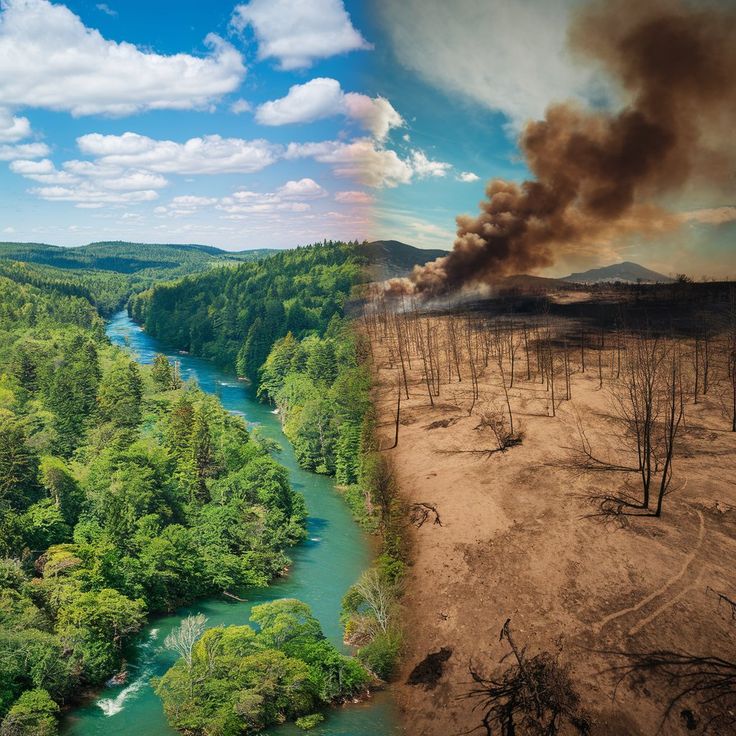
The damage does not always arrive as a single catastrophic event. Sometimes it arrives as an insurance renewal letter with a number that makes no sense until you realise the insurer has been quietly repricing the risk of where you live. Sometimes it arrives as a flood that never used to reach your street. Sometimes it arrives as the slow, invisible fact that fewer buyers are willing to pay what your home was worth three years ago. Climate change is not a future threat to real estate. In the most exposed markets in the world, it is a present and measurable financial reality. At TheHouse48, understanding where that risk is already pricing into values is not optional knowledge for serious buyers and investors.
The Scale of What Is Already Happening
The numbers being produced by independent analysts in 2025 and 2026 are striking in their specificity. Climate-related disasters cost up to $430 billion per year globally, representing roughly 0.5% of global GDP, and extreme hazard events can reduce property values by between 5 and 20% in directly affected areas according to UNEP FI evidence. A more targeted analysis from First Street, a climate risk financial modelling company, found that climate change could result in $1.47 trillion in net property value losses globally, driven by rising insurance costs and shifting consumer demand away from high-risk locations. These are not projections drawn from distant scenarios. The January 2025 Los Angeles wildfires alone are estimated to have destroyed more than 10,300 properties, causing expected losses of $135 billion, while the 2024 floods in Valencia and Alicante in Spain caused insured losses of more than €4 billion.
Florida: Where the Insurance Market Is Already Telling the Story
No property market in the world illustrates the climate value destruction dynamic more clearly than Florida. Miami tops the 2025 Global Real Estate Bubble Index with a score of 1.73, sitting in firm bubble risk territory, and the five largest metro areas projected to see the biggest spikes in insurance premiums as of early 2026 are Miami, Jacksonville, Tampa, New Orleans and Sacramento. Insurance costs are increasing faster than mortgage payments across Florida's coastal markets, squeezing homeowners and leading to climate-driven migration away from high-risk Sun Belt areas. Sea levels along US coastlines are estimated to rise an additional 10 to 12 inches in the next 30 years, which will increase coastal flooding by pushing tide and storm surge impacts further inland. For a buyer purchasing a waterfront property in Miami today, the financing cost is one number. The insurance trajectory over the next decade is a very different one, and the two are moving in opposite directions.
Spain's Coast: A Market Repricing After the Valencia Floods

The 2024 Valencia and Alicante floods introduced a dimension of climate risk to Spanish coastal real estate that had previously been underpriced by both buyers and insurers. Insured losses exceeded €4 billion from a single event, and the aftermath has triggered a recalibration of how flood risk is assessed across the Costa Blanca and Costa del Sol. Properties in low-lying coastal zones that previously carried minimal flood risk premiums are facing reassessment, and buyers who purchased at peak prices in the years before the event are finding that resale values in the most exposed areas have softened as risk-aware buyers apply greater scrutiny to drainage infrastructure, elevation and historical flood mapping before committing.
The Insurance Withdrawal Problem
Perhaps the most insidious mechanism through which climate change destroys property values is not the event itself but the market response that precedes and follows it. When insurers withdraw from a market or price premiums beyond what homeowners can absorb, properties become effectively unmortgageable in many jurisdictions, since lenders require insurance as a condition of lending. A home that cannot be insured at a viable cost cannot be financed by most buyers. A home that cannot be financed by most buyers has a structurally compressed pool of potential purchasers. That compressed pool pushes prices down regardless of the property's physical condition. The UK's Association of British Insurers paid out £6.1 billion in property claims in 2025, the highest annual total on record, and the pricing response is already visible in renewal quotes across flood-prone and wildfire-adjacent zones.
TheHouse48 believes that climate risk is now a due diligence item in any serious property purchase, not a philosophical consideration for the future. The buyers who are already asking about flood maps, fire risk ratings, insurance availability and long-term sea level projections before they make an offer are not being cautious. They are be
ing accurate.
Sign up for our emails and be the first to know about special offers.
Sign In
Comments